A guide to
Johannes Brahms
Hamburg 1833 — Vienna 1897
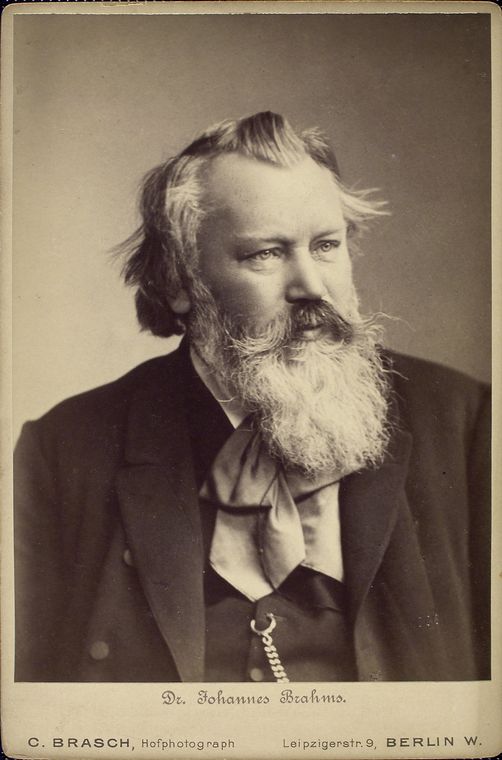
Johannes Brahms was the great classicist of the Romantic century — the composer who, in an age that prized the new and the programmatic, looked back to Bach, Handel and Beethoven and proved that the inherited forms still had everything left to say. He wrote four symphonies, four concertos, a German Requiem, and a vast body of chamber music and song; but his life began and ended at the keyboard, and it is in the solo piano and organ works — the variation sets, the F-minor sonata, the late intermezzi, the posthumous chorale preludes — that the private Brahms speaks most directly.
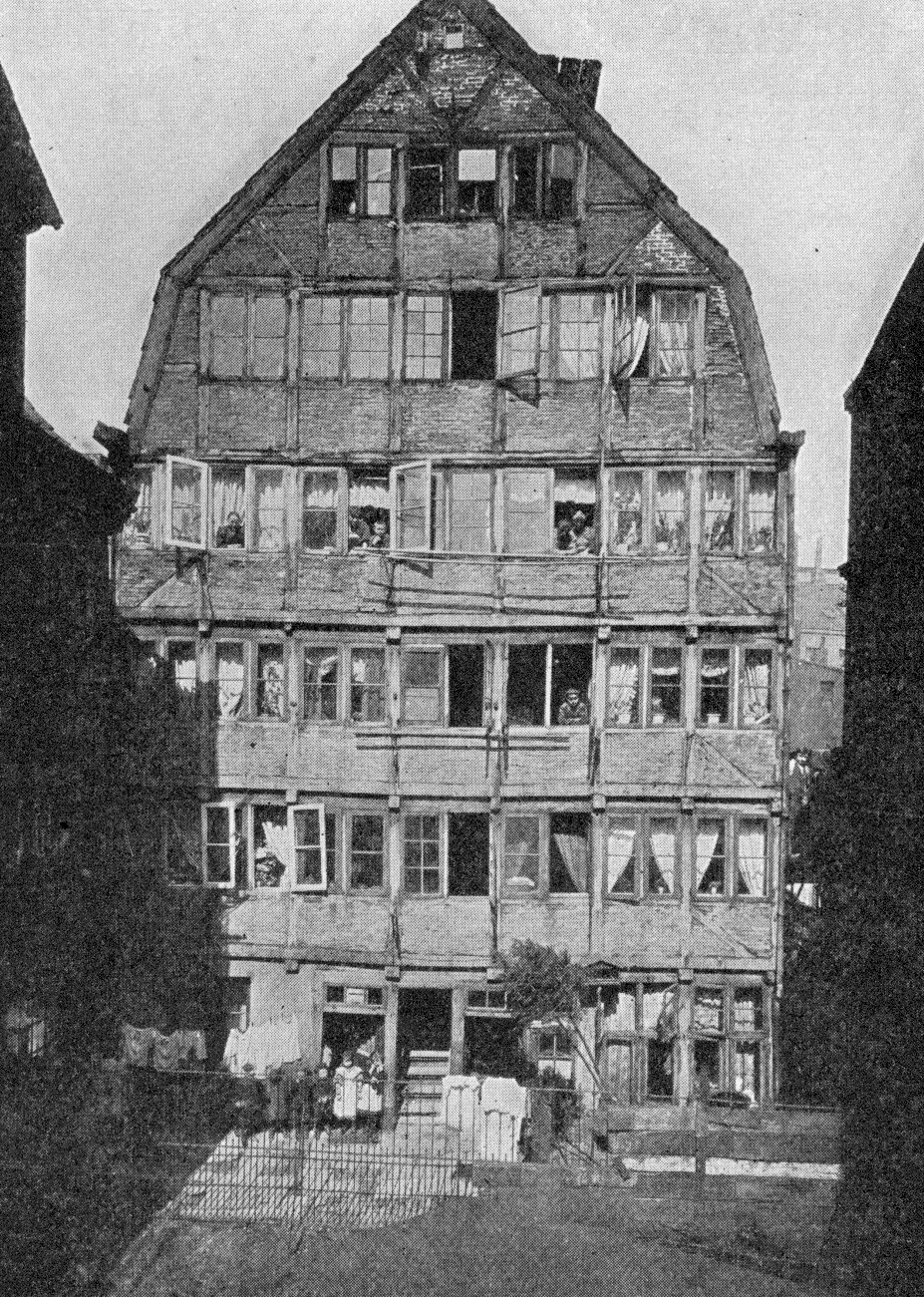
He was born on 7 May 1833 in Hamburg, the son of Johann Jakob Brahms, a struggling double-bass and horn player who scraped a living in the city’s theatre bands and dance halls. The boy’s talent was prodigious and his family poor; from an early age he earned money playing the piano for the family, and his first formal teacher, Otto Cossel, soon passed him to the man who would shape him: Eduard Marxsen, a Hamburg pianist and composer steeped in the Viennese classics, who grounded Brahms in counterpoint and in the music of Bach and Beethoven and refused to charge the family a fee.
Düsseldorf, and Schumann’s “New Paths”
In the spring of 1853 the twenty-year-old set out on a concert tour as accompanist to the Hungarian violinist Eduard Reményi. The journey turned into the making of him. At Hanover he met the violinist Joseph Joachim, who became his closest musical friend and ally for life; on Joachim’s recommendation he called at Weimar and played for Franz Liszt, the reigning prince of the avant-garde — a meeting of two temperaments that could hardly have been less alike. Then, in the autumn, Joachim sent him on to Düsseldorf, to the house of Robert Schumann and his wife, the great pianist Clara Schumann.
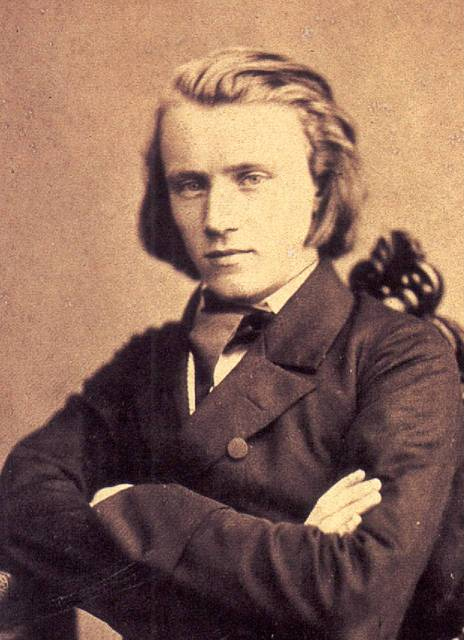
Schumann was overwhelmed. After years of near-silence as a critic he took up his pen again and, on 28 October 1853, published in the Neue Zeitschrift für Musik the essay “Neue Bahnen” (“New Paths”), proclaiming the unknown youth as the man “called to give ideal expression to his times,” one who “sprang fully armed, like Minerva, from the head of Jove.” It was an extraordinary anointing — and a burden. Brahms spent the rest of his life measuring himself against it, famously laboring more than two decades over a first symphony for fear of the comparison with Beethoven that Schumann’s prophecy had invited. When Schumann collapsed into mental illness the following year and was confined until his death in 1856, Brahms moved to Düsseldorf to help Clara, beginning the deepest and most guarded attachment of his life.
The pianist’s grand manner: the F-minor Sonata and the Handel Variations
The works of these years are the music of a young virtuoso who thought orchestrally at the keyboard. The Piano Sonata No. 3 in F minor, Op. 5 (1853) is the last and largest of his three sonatas — a five-movement structure of symphonic ambition, its Andante prefaced by lines of love poetry and answered, late in the work, by a brooding intermezzo Brahms titled Rückblick (“Backward Glance”) that returns to the slow movement as memory. It outgrows the piano even as it exploits it, and it has remained a recitalist’s proving-ground: Hans von Bülow — the most formidable pianist-conductor of the age — played it at Dresden on 10 March 1884, as Elisabet von Herzogenberg reported to the composer.
If the sonata is Brahms the architect, the Variations and Fugue on a Theme by Handel, Op. 24 (1861) is Brahms the craftsman in full command. He takes a plain binary air from one of Handel’s harpsichord suites and spins twenty-five variations from it, capped by a fugue of cumulative grandeur — a deliberate act of homage to the Baroque master he revered. The composer Albert Dietrich, who knew him well, has left the warmest picture of the piece in its first life. The night before a concert at Oldenburg, Brahms played the variations to the orchestra; they were, Dietrich wrote, “wonderfully beautiful and full of true genius,” closing with “a fugue that is perfectly fascinating.” His playing raised the players’ enthusiasm to such a pitch that the concert itself was triumphant — and when a laurel wreath was hung over his chair in tribute, Brahms “modestly laid it underneath the pianoforte.” He published the set with Breitkopf & Härtel, telling Dietrich of it by letter from Hamburg in 1861.
The night before the concert, Brahms delighted the orchestra by playing to them his variations on a theme by Handel. These variations are wonderfully beautiful and full of true genius; they close with a fugue that is perfectly fascinating, and that is saying much of a fugue!
— Albert Dietrich, Recollections of Johannes Brahms, 1899
Vienna
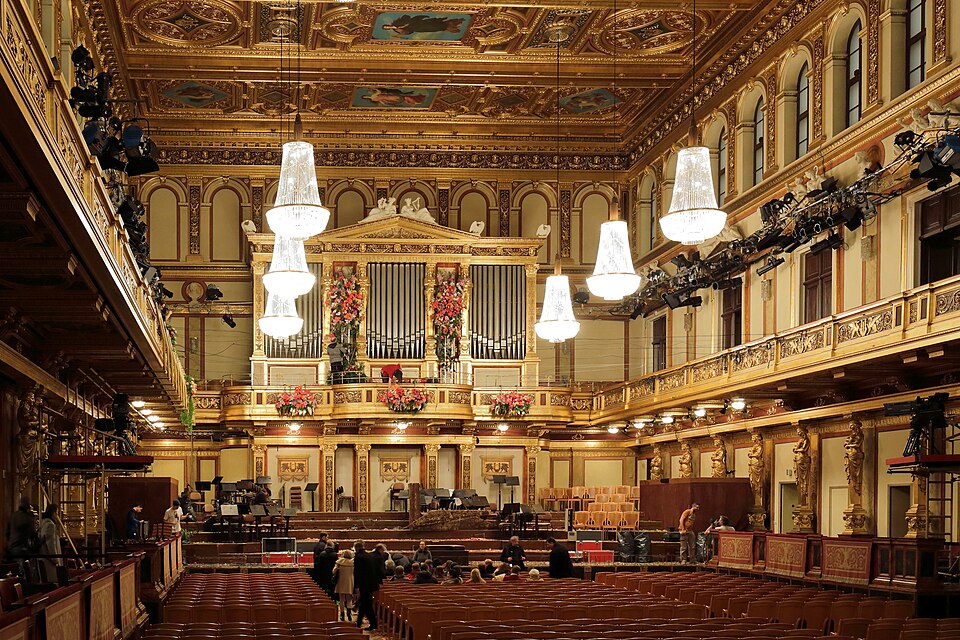
Hamburg never gave Brahms the conductorship he wanted, and in 1862 he made his first extended stay in Vienna — the city of Haydn, Mozart, Beethoven and Schubert, and the place he would call home for the rest of his life. There he found a public, a circle of devoted friends, and eventually an institutional role: from 1872 to 1875 he served as artistic director of the concerts of the Gesellschaft der Musikfreunde, presiding over programmes in the great Musikverein hall.
It was Vienna, too, that confirmed his reputation as more than a miniaturist. The German Requiem (Ein deutsches Requiem), on biblical texts of his own choosing rather than the Latin Mass, reached its decisive form at Bremen Cathedral on Good Friday 1868 and made him famous across Europe. The long-dreaded First Symphony finally followed, premiered at Karlsruhe in 1876. By then Brahms had become, half against his will, the figurehead of the conservative party in the great mid-century quarrel — the camp gathered around Joachim and the critic Eduard Hanslick that set itself against the “Music of the Future” of Liszt and Wagner. The opposition was always more a matter of partisans than of the two men themselves; Brahms kept a wary respect for what his rivals could do.
The classicist’s workshop
What set Brahms apart from his Romantic contemporaries was the depth of his roots in the past. He was a scholar as well as a composer — he collected musical manuscripts, took part in the great critical editions of the day (he edited works of Couperin and C. P. E. Bach, and championed the complete editions of Handel and Schubert), and absorbed the polyphony of the old masters until it became his own idiom. His mastery of variation and of dense, purposeful counterpoint — the technique a later age, following Schoenberg, would call “developing variation” — let him build large structures from the smallest motivic cells, so that a whole movement can seem to grow organically from its opening bars.
That learning is audible everywhere in the keyboard music: in the Handel fugue, in the Bach-like rigor beneath the late intermezzi, and most plainly in his very last works, the organ chorale preludes. Brahms wore the inheritance lightly, but he never doubted it. To write “new paths,” as Schumann had demanded, he chose to walk the old ones with unmatched command.
The late Klavierstücke
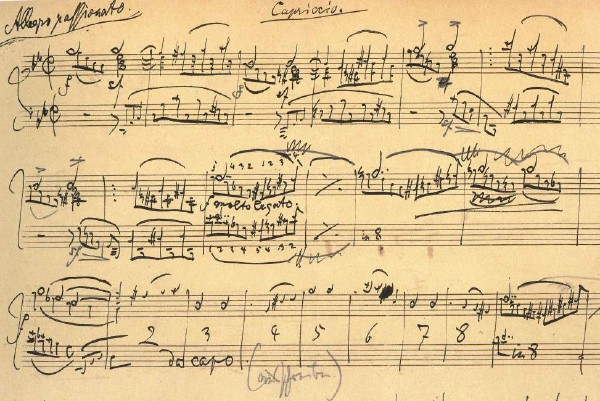
In the early 1890s, after announcing that he had stopped composing, Brahms returned to the piano for the last great flowering of his keyboard music: the Fantasien, Op. 116, the three Intermezzi, Op. 117, and the two sets of Klavierstücke, Op. 118 and Op. 119 (1892–93). These are intimate, autumnal pieces — capricci and intermezzi, a ballade, a romance — in which the grand manner of the F-minor sonata has contracted to a handful of bars charged with feeling.
His friends felt their weight at once. Heinrich von Herzogenberg wrote to Brahms in February 1894 that he had “at last purchased your glorious Klavierstücke,” that Clara Schumann had been “singing their praises in the summer at Interlaken,” and that he had set his heart on the “glorious ballade” — the dark Ballade in G minor, Op. 118 No. 3. He added the warning that anyone who has tried these pieces will recognise:
This set of pieces is apparently easy, but we ordinary mortals find ourselves at a standstill once we have passed the reading stage. I really felt as if I could play the glorious ballade once or twice, and do wish I could.
— Heinrich von Herzogenberg to Brahms, February 1894
The most touching record of the late pieces comes from the Schumann household. Eugenie Schumann, Clara and Robert’s daughter, remembered her mother playing the Fantasia, Op. 116 and the Intermezzo in C-sharp minor, Op. 117 “wonderfully” when they had just been published, “so that they haunted me for months”; three months later Clara played them again, and they had become, Eugenie wrote, “spiritualised, transfigured.” In Clara’s last years, with Brahms himself sitting opposite her, Eugenie heard her mother play the Romance in F major and an Intermezzo from Op. 118 — Brahms, “evidently touched with deep emotion,” said simply, “Your mother has been playing most beautifully to me.” Clara Schumann died in May 1896, eleven months before Brahms.
The organ at the end, and the legacy
Brahms’s very last completed works returned to the instrument of the church and to the Lutheran chorales of his youth. The Eleven Chorale Preludes, Op. 122 — written in 1896, in the months after Clara’s death, and published only after his own — are spare, valedictory settings of tunes such as Herzlich tut mich verlangen and O Welt, ich muss dich lassen (“O world, I must leave thee”), the last of which closes the set and was among the last music he wrote. Even here the modesty is characteristic: Brahms spoke of “other less compromising things, which are, however, not suitable for publication,” that he would have liked to show only at the piano — almost certainly these organ preludes, kept back as private devotion.
He died in Vienna on 3 April 1897, and was buried in the city’s Zentralfriedhof not far from Beethoven and Schubert — the masters he had spent his life answering. What he left the keyboard repertoire was a body of work that carried the Baroque and Classical inheritance of Bach, Handel and Beethoven intact into the late Romantic century, and handed it on: the contrapuntal seriousness, the variation technique, the conviction that the old forms were inexhaustible. It is the same line of descent that runs from Bach through Mendelssohn and on to Max Reger, for whom Brahms’s marriage of Baroque rigor and Romantic feeling was the point of departure for everything.