A guide to

Franz Liszt

Raiding (Doborján) 1811 — Bayreuth 1886
  1. 1811 Born at Raiding (Doborján), 22 October
  2. 1823 Cherubini bars the boy from the Paris Conservatoire as a foreigner
  3. 1832 Hears Paganini in Paris — resolves to remake piano technique
  4. 1840 His London solo concerts are billed "recitals" — a new word
  5. 1848 Kapellmeister at Weimar; the great composing decade begins
  6. 1865 Takes minor orders in Rome — the "Abbé Liszt"
  7. 1875 First president of the new Academy of Music in Budapest
  8. 1886 Dies at Bayreuth, 31 July
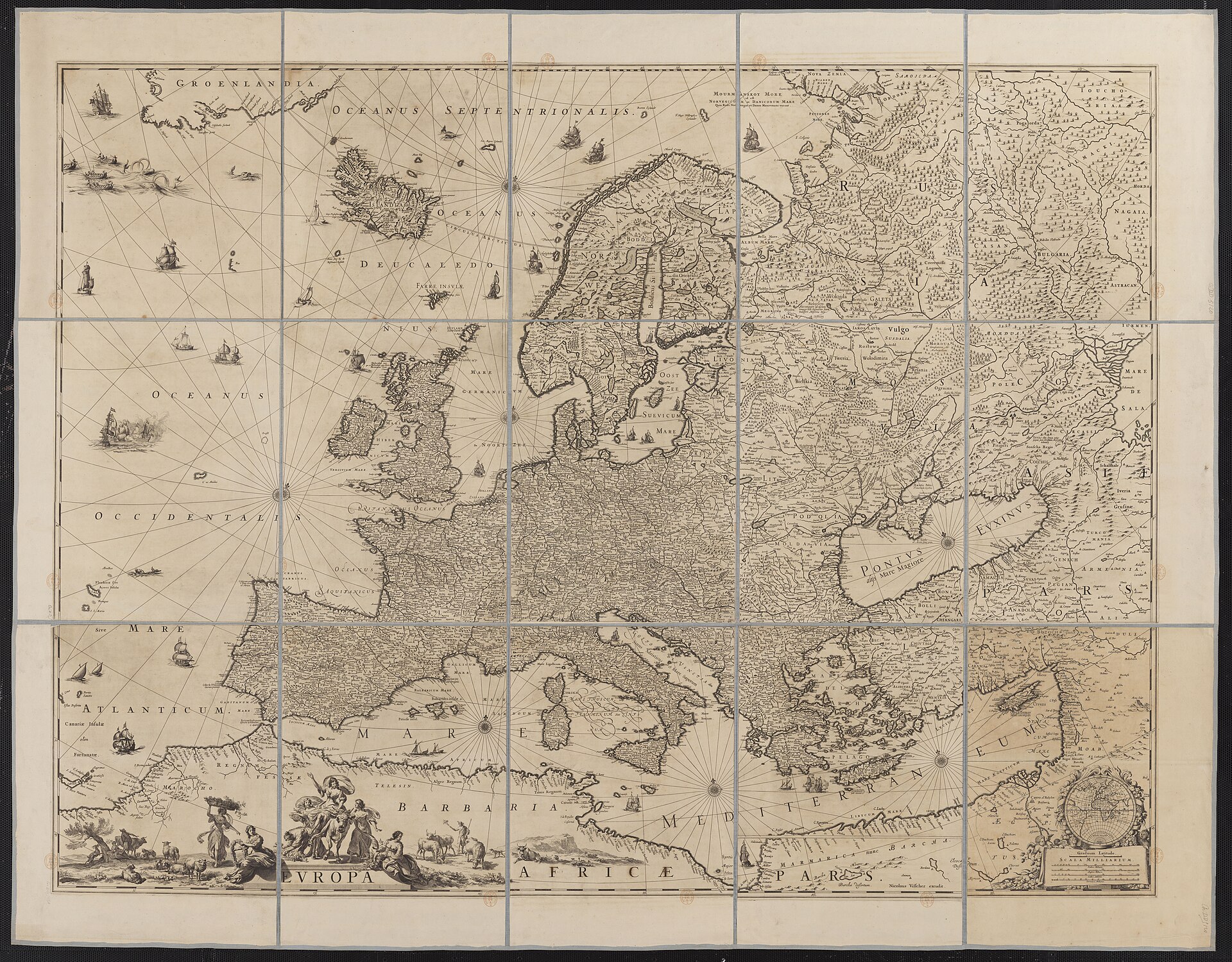
Historic map
Paris virtuoso base · 1823–1847
Weimar Kapellmeister · 1848–1861
Vienna Czerny & Salieri · 1822
Raiding born 1811
Budapest Academy of Music · 1875
Rome minor orders · 1865
*Europa*, the Visscher wall-chart of the continent (the same Amsterdam engraving used for [Handel](/composer/handel/) and [Mendelssohn](/composer/mendelssohn/)). No composer of the century covered more of it: born on its eastern marches at Raiding, made in Paris, settled at Weimar, tonsured in Rome, honoured in Pest. In his last seventeen years he shuttled between Rome, Weimar and Budapest so steadily that he called it his *vie trifurquée* — his three-forked life. Wikimedia Commons.
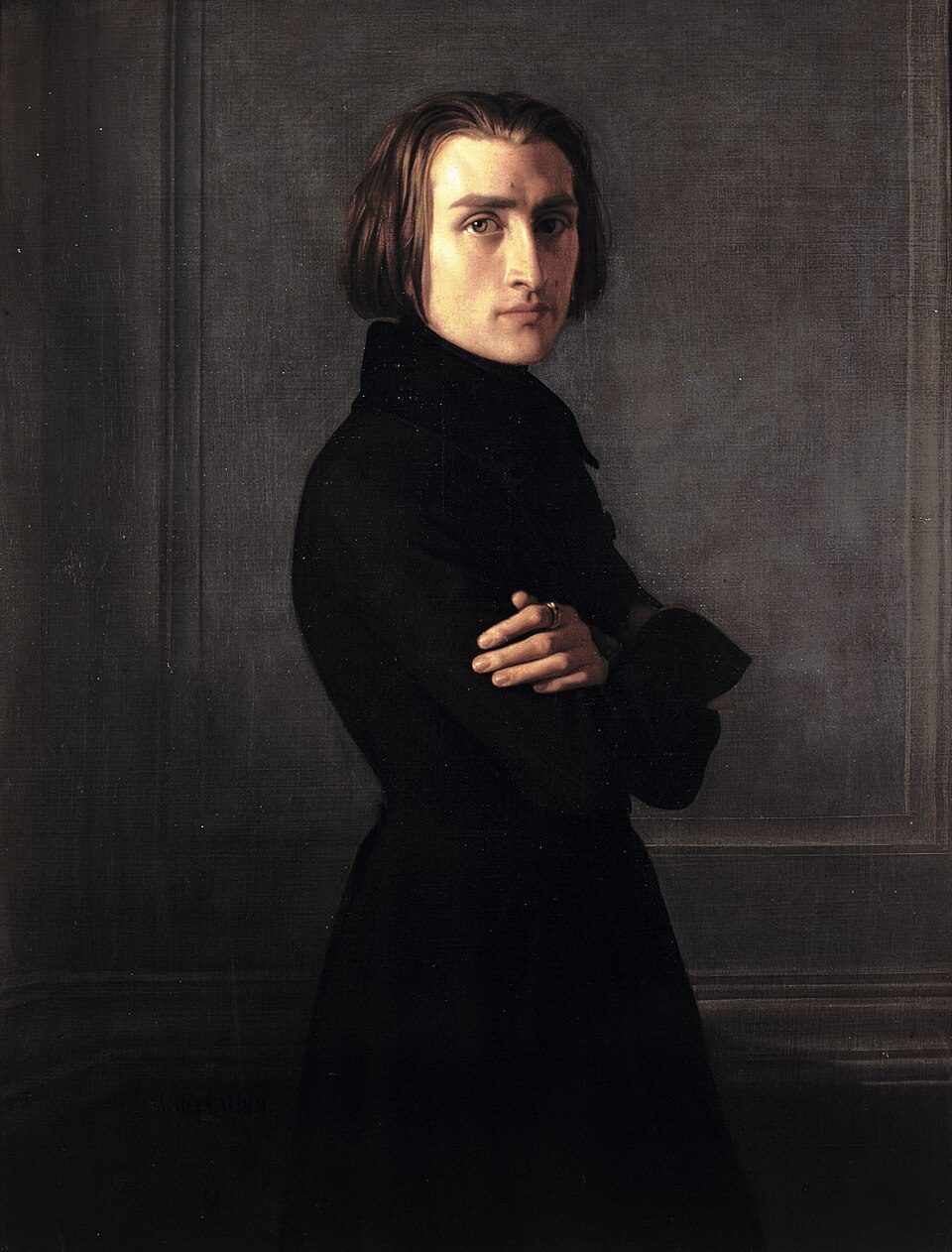
Franz Liszt, portrait by Henri Lehmann, 1839
Henri Lehmann, *Portrait of Franz Liszt*, 1839 — painted in Rome during the years Liszt and Marie d'Agoult spent in Italy. Musée Carnavalet, Paris; via Wikimedia Commons.

Franz Liszt was the most famous musician alive for most of the nineteenth century, and he very nearly invented the role he filled. The solo piano recital, the performer who plays a whole evening alone and from memory, the piano turned sideways so the audience sees the player’s profile and the raised lid throws the sound into the hall, the touring virtuoso as a figure of public hysteria — all of these are, in their modern form, Liszt’s doing. He was also a composer of radical originality whose late music reached the edge of tonality forty years early, a conductor who premiered Wagner’s Lohengrin, the most generous patron of his profession, and, at the end, a man in minor holy orders who divided each year between Rome, Weimar and Budapest.

He was born on 22 October 1811 at Raiding — Hungarian Doborján — a village then in the Kingdom of Hungary, within the Austrian Empire, on land belonging to the Esterházy princes. His father Adam Liszt was a steward in the Esterházy administration and a capable amateur cellist who had played in the court orchestra at Eisenstadt in the last years of Haydn’s establishment there. The household spoke German; Franz never learned to speak Hungarian fluently, a fact that did nothing to dim either his lifelong Hungarian self-identification or Hungary’s claim on him.
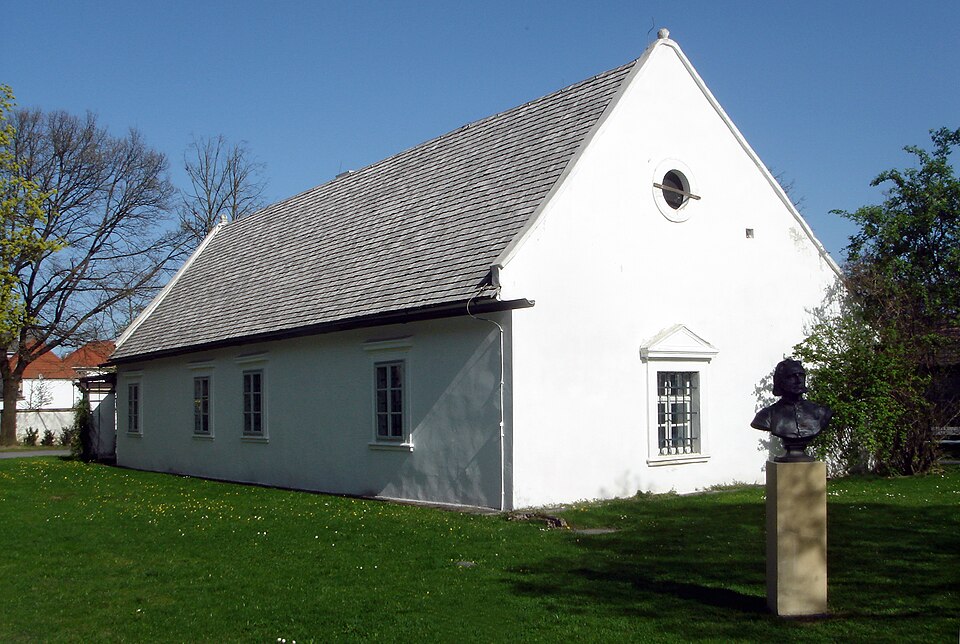
Liszt's birthplace at Raiding
The house at Raiding (Doborján) where Liszt was born — his father's quarters on the Esterházy estate, now a Liszt museum. Wikimedia Commons.

The boy’s gift was obvious and early. He gave his first public concerts in the Hungarian towns of Sopron and Pressburg (Bratislava) in 1820, at eight and nine, and a group of Hungarian magnates was so impressed that they clubbed together to fund a six-year stipend for his musical education. The family moved to Vienna in 1822, where Franz studied piano with Carl Czerny — himself a pupil of Beethoven — who was so struck by the child that he taught him without a fee. Theory and composition he took from Antonio Salieri, by then the elderly court Kapellmeister.

It is from these Vienna years that the most famous Liszt legend dates: the Weihekuss, the “consecration kiss,” in which a deaf and ageing Beethoven is said to have climbed onto the stage after a concert in April 1823 and kissed the eleven-year-old on the forehead. Liszt told the story, with growing detail, for the rest of his life and treated it as the anointing of his vocation. Scholars have never been able to confirm that Beethoven was even present; the most that can be honestly said is that Liszt believed it, or needed to.


Paris, Paganini, and the remaking of technique

In 1823 the family moved on to Paris, the centre of the musical world. There Liszt met the one institutional rebuff of his career: Luigi Cherubini, director of the Conservatoire, refused him admission because he was a foreigner, the statutes barring non-French students. Liszt never held a conservatoire diploma. He studied privately instead — composition with Anton Reicha and the opera composer Ferdinando Paër — and was launched into the Paris salons as a prodigy. When his father died at Boulogne in 1827, the teenaged Liszt supported himself and his mother by teaching, fell into a long religious and emotional crisis, and for a time considered entering the priesthood.

What pulled him out was the artistic ferment of Paris around 1830: the July Revolution, the friendship of Hector Berlioz (whose Symphonie fantastique Liszt heard at its 1830 premiere and promptly transcribed for piano), the company of Frédéric Chopin, and, decisively, the violin. In 1832 Liszt heard Niccolò Paganini play in Paris and was thunderstruck. Paganini had made the violin do things no one believed possible and had built a legend around the feat; Liszt set himself to do the same for the piano. The wave of studies that followed — the Étude en douze exercices reworked into the Grandes études and finally the Études d’exécution transcendante — pushed piano technique into territory that defined virtuosity for a century.

The other great event of the decade was personal. Around 1833 Liszt began a relationship with the Countess Marie d’Agoult, a married aristocrat and writer who left her husband to live with him. Between 1835 and 1839 they travelled and lived in Switzerland and Italy, and had three children: Blandine, Cosima — born at Como in 1837, later the wife first of the conductor Hans von Bülow and then of Wagner — and Daniel. The landscapes and pictures and books of those years became the first two volumes of the Années de pèlerinage (“Years of Pilgrimage”), among the most personal travel-diaries any composer has left.


The Glanzzeit and “Lisztomania”
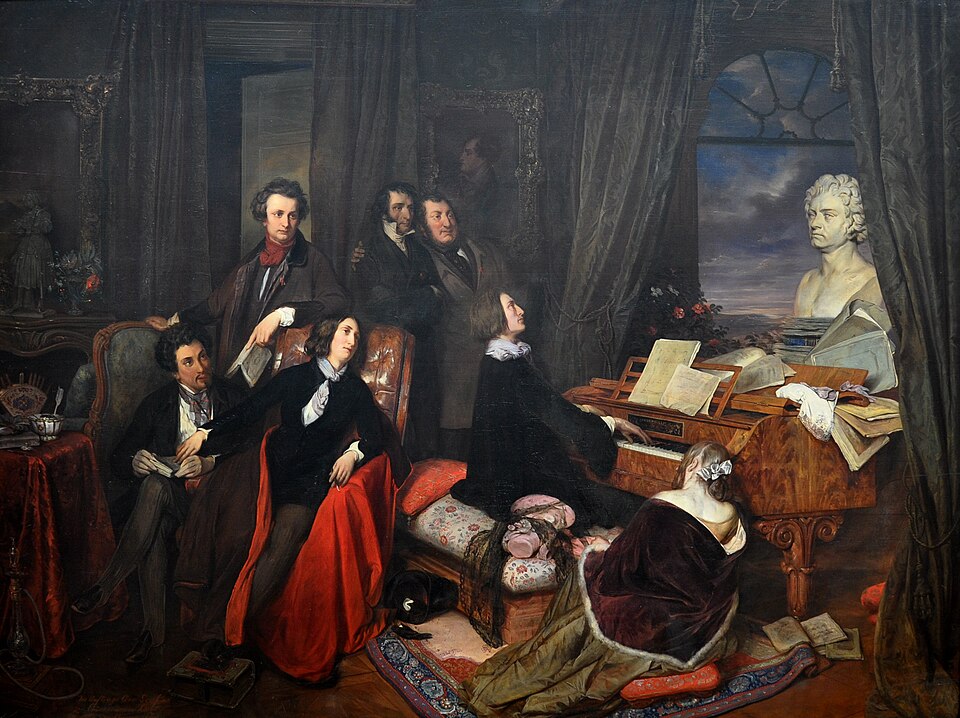
Liszt at the Piano, by Josef Danhauser, 1840
Josef Danhauser, *Liszt am Flügel* (Liszt at the Piano), 1840. The composer plays beneath a colossal bust of Beethoven; gathered around are the writers Dumas, Hugo and George Sand, the figure of Marie d'Agoult at his feet, and — standing — Rossini and Paganini. A staged manifesto of where Romantic music thought it stood. Alte Nationalgalerie, Berlin; via Wikimedia Commons.

From 1839 to 1847 Liszt toured incessantly — from Ireland to the Russian interior, from Lisbon to Constantinople — in a campaign of concert-giving without precedent in scale. It was during this Glanzzeit, his “time of brilliance,” that he settled the conventions of the modern concert. His London concerts of 1840 were the first to be advertised as “recitals”, a coinage that puzzled the critics (“How can one recite upon the piano?”). He played entire programmes alone, without supporting artists; he played from memory, then a novelty bordering on arrogance; and he placed the instrument sideways to the hall. The audiences responded with a frenzy the poet Heinrich Heine, reporting from Paris in 1844, named “Lisztomania” — and described, half-admiring and half-appalled, as a kind of contagious medical hysteria.

When Liszt appeared, the hall fell into a sort of madness. Women fought over his green gloves and the broken strings of his piano; they pressed forward not to hear music so much as to witness a public fever.

— after Heinrich Heine’s Paris music dispatches of 1844, in which he coined the word Lisztomanie

Against this picture of self-display stands the other Liszt, the one his contemporaries found harder to explain: the most open-handed musician of the age. He gave away enormous sums — to flood victims, to the Cologne Cathedral building fund, to the founding of a German national pension for musicians — and when the public subscription for a Beethoven monument at Bonn stalled in the early 1840s, Liszt simply paid the shortfall himself and underwrote the 1845 inauguration festival. His own explanation for all of it was the motto he adopted as his rule of life: Génie oblige — genius has obligations.


Weimar: the conductor and the composer

In 1847, at the absolute height of his fame, Liszt abruptly stopped touring. He had met Princess Carolyne zu Sayn-Wittgenstein in Kiev that February; she became his companion for the rest of his life and his fiercest advocate for the idea that he should stop being a travelling showman and become a composer. From 1848 he settled at Weimar as Kapellmeister extraordinary to the Grand Ducal court — the small Thuringian town that had been Goethe and Schiller’s, now made briefly into the headquarters of musical radicalism.

The Weimar decade is the heart of Liszt’s composing life. He invented the symphonic poem — a single-movement orchestral form bound together not by classical development but by thematic transformation, in which a handful of motives are continually remade into new characters — and wrote twelve of them, Les Préludes the most played. He composed the Faust and Dante symphonies, reworked the Transcendental Études into their final 1852 form, and in 1853 completed the Piano Sonata in B minor, the single-movement, half-hour structure that is the summit of the Romantic piano sonata. He dedicated it to Robert Schumann, in return for Schumann’s dedication of his own Fantasie in C.

As a conductor he used Weimar to champion the music he believed in, often at his own professional risk. On 28 August 1850 — Goethe’s birthday — he conducted the world premiere of Wagner’s Lohengrin while Wagner himself, a wanted man after the Dresden uprising, was in political exile in Switzerland and could not attend his own opera. Liszt’s open partisanship for Wagner and Berlioz, and his theory of “the music of the future,” made Weimar one pole of the great mid-century argument that set the New German School against the conservative party gathered around Brahms and the critic Eduard Hanslick.


The organ works

Liszt was never a church organist, yet he wrote three works that permanently enlarged the Romantic organ repertoire — the natural inheritance, on this instrument, of Bach and the immediate ancestor of Franck and Reger.

The Fantasy and Fugue on the chorale “Ad nos, ad salutarem undam”, S. 259 (1850), takes its bare modal theme from the Anabaptist chorus in Meyerbeer’s opera Le prophète and builds from it a continuous half-hour arch of fantasy, hymn and fugue — the first Romantic organ work conceived on a symphonic scale, and still the piece by which organists measure themselves against the instrument’s largest demands. The Prelude and Fugue on B-A-C-H, S. 260 (1855, revised 1870), spells out Bach’s name in the German note-names B♭–A–C–B♮ and drives the cipher through chromatic harmony so dense it stands at the threshold of atonality. And the Variations on “Weinen, Klagen, Sorgen, Zagen”, S. 180 — written in 1862 after the death of his daughter Blandine, on the descending ground bass Bach had used in his Cantata BWV 12 and again in the Crucifixus of the B-minor Mass — turns a Baroque lament into a Romantic meditation on grief that resolves, at the last, into Bach’s own consoling chorale.


Rome and the Abbé
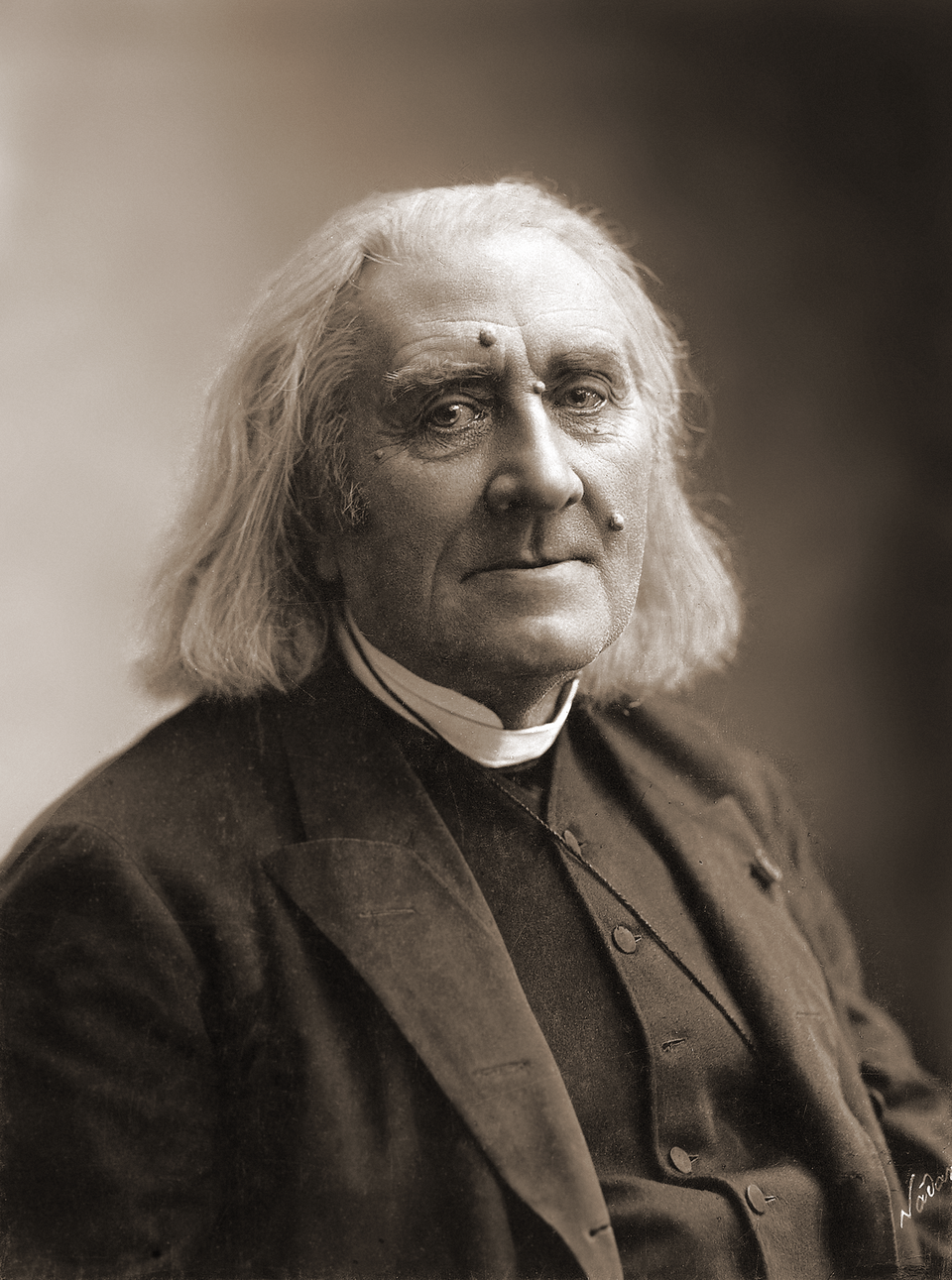
Franz Liszt photographed by Nadar, 1886
Félix Nadar, *Franz Liszt*, Paris, March 1886 — a few months before the composer's death. The warts, the long white hair and the cassock of the *Abbé Liszt* are all here. Via Wikimedia Commons.

Liszt and Carolyne had hoped to marry, but the annulment of her earlier marriage collapsed in Rome in 1861 — by the most famous account, on the very eve of the wedding. Liszt remained in Rome, drawing closer to the Catholic Church, and in 1865 received the four minor orders of the priesthood: tonsure, ostiarius, lector, exorcist and acolyte. He was never ordained a priest, and the minor orders carried no bar to marriage; but he wore the cassock for the rest of his life, and Rome and the newspapers called him the Abbé Liszt. The religious impulse, present in him since the Paris crisis of his teens, now produced the oratorios Christus and The Legend of Saint Elisabeth, the Hungarian Coronation Mass for Franz Joseph’s 1867 coronation as King of Hungary, and the stark stations-of-the-cross cycle Via Crucis.

It also produced the strangest and most prophetic music of the century. The late piano pieces — Nuages gris (1881), La lugubre gondola (1882, written at Venice in premonition of Wagner’s death there), Unstern!, the Csárdás macabre, and the Bagatelle sans tonalité of 1885, a “bagatelle without tonality” whose very title refuses a key — abandon the grand manner entirely. They are bleak, harmonically rootless, sometimes barely a page long, and they look straight past Liszt’s own century to Debussy, Bartók and the dissonant music that would not be written for another generation.


Budapest, the students, and the end
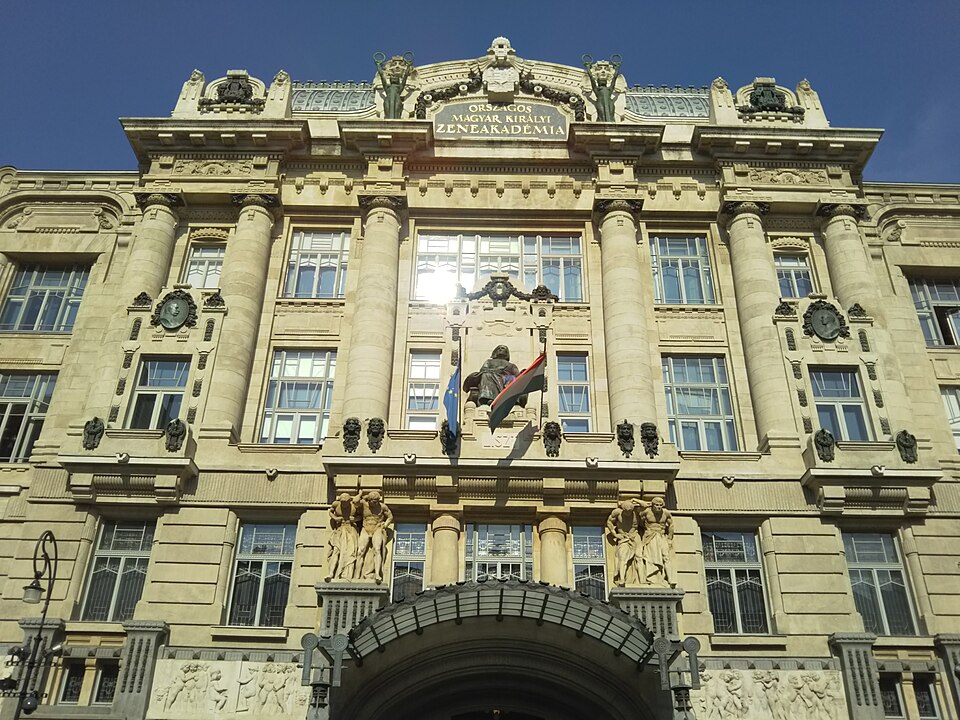
The Liszt Academy of Music, Budapest
The Franz Liszt Academy of Music, Budapest. Liszt was the founding president of the institution in 1875; this Art Nouveau main building on Liszt Ferenc Square opened in 1907, long after his death, and still bears his name. Wikimedia Commons.

From around 1869 Liszt arranged his life in three places at once — winters largely in Rome, springs teaching at Weimar, and time each year in Pest — the vie trifurquée, the “three-forked life,” that the map above traces. In 1875 he became the first president of the new Royal National Hungarian Academy of Music in Budapest, the institution that carries his name today. In all three cities he taught, and he taught as he always had: for free. He had refused payment for lessons his entire life, and the masterclasses of his last years drew the young pianists — Eugen d’Albert, Emil von Sauer, Moriz Rosenthal, Alexander Siloti, who would in turn teach Rachmaninoff — through whom the grand Romantic tradition of playing descends to the present.

His Hungarian music belongs to these years and the love of country behind them, even if its materials were not quite what he thought. The Hungarian Rhapsodies draw on the urban verbunkos and café-band style of the Romani musicians Liszt heard in Hungary, rather than the older peasant folk music that Bartók and Kodály would later collect — and that Bartók, with some asperity, distinguished from Liszt’s sources. The patriotic point, for Liszt, was never in doubt: Pest had given him a jewelled sword of honour as a national hero as far back as 1840.

Liszt died at Bayreuth on 31 July 1886, aged seventy-four, of pneumonia caught while attending the Wagner festival run by his daughter Cosima — Wagner’s widow since 1883. He had outlived Wagner, Chopin, Berlioz, Schumann and Mendelssohn, and nearly every quarrel of his enormous life. What he left behind was not only the symphonic poem, the modern recital, the transformed technique of the instrument, and the organ works that join Bach to Franck and Reger, but the example — endlessly imitated, never equalled — of the musician as a public force.

All works (311)

Download all forScore metadata (.csv) one row per PDF across every work · semicolon-delimited

CatalogTitleInstrumentation
12 Lieder von Franz Schubert, S.558 Klavier 1 PDF Spotify
2 Album-Leaves, S.163f Klavier 1 PDF Spotify
2 Album-Leaves, S.163w Klavier 1 PDF Spotify
2 Album-Leaves, S.164o Klavier 1 PDF Spotify
2 Album-Leaves, S.166l Klavier 1 PDF Spotify
2 Album-Leaves, S.167l solo Klavier 1 PDF Spotify
2 Csárdás, S.225 Klavier 1 PDF Spotify
2 Kirchenhymnen, S.669 Orgel (solo) 1 PDF Spotify
2 Konzertetüden, S.145 Klavier 1 PDF Spotify
2 Lieder von Anton Rubinstein, S.554 Klavier 1 PDF Spotify
2 Légendes, S.175 Klavier 1 PDF Spotify
2 Polonaises, S.223 Klavier 1 PDF Spotify
2 Sketches from 1829, S.692p Klavier 1 PDF Spotify
2 Stücke aus Tannhäuser und Lohengrin, S.445 Klavier 1 PDF Spotify
2 Transcriptions d'après Rossini, S.553 Klavier (solo) 1 PDF Spotify
2 Ungarische Werbungstänze, S.241 Klavier 1 PDF Spotify
2 Vortragsstücke, S.268 Orgel 1 PDF Spotify
3 Caprices-Valses, S.214 Klavier 1 PDF Spotify
3 Chansons, S.510a Klavier (solo) 1 PDF Spotify
3 Märsche von Franz Schubert, S.426 Klavier 1 PDF Spotify
3 Sonetti del Petrarca, S.158 Klavier 1 PDF Spotify
3 Études de concert, S.144 Klavier 1 PDF Spotify
4 Album-Leaves, S.164s Klavier 2 PDFs Spotify
5 Album-Leaves, S.167k Klavier 1 PDF Spotify
5 Klavierstücke, S.192 Klavier 1 PDF Spotify
5 Ungarische Volkslieder, S.245 Klavier 1 PDF Spotify
6 Melodien von Franz Schubert, S.563 Klavier 1 PDF Spotify
6 Polish Songs, S.480 Klavier 1 PDF Spotify
8 Album-Leaves, S.164e Klavier 4 PDFs Spotify
8 Variations, S.148 Klavier (solo) 2 PDFs Spotify
Ab irato, S.143 Klavier (solo) 1 PDF Spotify
Abschied, S.251 Klavier 1 PDF Spotify
Air cosaque, S.249c Klavier 1 PDF Spotify
Album d'un voyageur, S.156 Klavier (solo) 5 PDFs Spotify
Album-Leaf '2nd Concerto', S.163a-1 1 PDF Spotify
Album-Leaf 'Ah, vous dirai-je, maman', S.163b Klavier 1 PDF Spotify
Album-Leaf 'Andante molto espressivo', S.165f Klavier 1 PDF Spotify
Album-Leaf 'Andante religioso', S.166h Klavier 1 PDF Spotify
Album-Leaf 'Andante', S.167r Klavier MIDI3 PDFs Spotify
Album-Leaf 'Andantino', S.163a-2 1 PDF Spotify
Album-Leaf 'Andantino', S.164p Klavier 2 PDFs Spotify
Album-Leaf 'Apparition 1', S.166z Klavier 1 PDF Spotify
Album-Leaf 'Ave Maria', S.164q Klavier 1 PDF Spotify
Album-Leaf 'Consolation 1', S.165a Klavier 1 PDF Spotify
Album-Leaf 'Dante fragment', S.701e Klavier 1 PDF Spotify
Album-Leaf 'Dante-Symphony', S.165e Klavier 1 PDF Spotify
Album-Leaf 'Friska', S.166k Klavier 1 PDF Spotify
Album-Leaf 'Fugue Chromatique', S.167j Klavier 1 PDF Spotify
Album-leaf 'Glasgow fragment', S.701f Klavier 1 PDF Spotify
Album-Leaf 'Huguenots', S.167x Klavier 1 PDF Spotify
Album-Leaf 'Lélio', S.167g Klavier 1 PDF Spotify
Album-Leaf 'Poco adagio aus der Graner Messe', S.167c Klavier 1 PDF Spotify
Album-Leaf 'Portugal', S.166b Klavier solo 1 PDF Spotify
Album-Leaf 'Rákóczi-Marsch', S.164f Klavier 1 PDF Spotify
Album-Leaf, S.165k Klavier 1 PDF Spotify
Album-Leaf, S.166a Klavier 1 PDF Spotify
Albumblatt in E major, S.164 Klavier 1 PDF Spotify
Albumblatt in Walzerform, S.166 Klavier (solo) 1 PDF Spotify
Albumblätter für Prinzessin Marie von Sayn-Wittgenstein, S.166m Klavier 1 PDF Spotify
Allegro di bravura, S.151 Klavier (solo) 1 PDF Spotify
Alleluja, S.183-1 1 PDF Spotify
Am stillen Herd, S.448 Klavier (solo) 1 PDF Spotify
Andante Finale und Marsch aus der Oper König Alfred, S.421 Klavier (solo) 1 PDF Spotify
Années de pèlerinage I, S.160 Klavier 1 PDF Spotify
Années de pèlerinage II, S.161 Klavier 1 PDF Spotify
Années de pèlerinage II, Supplément, S.162 Klavier 2 PDFs Spotify
Années de pèlerinage III, S.163 Klavier 1 PDF Spotify
Apparitions, S.155 Klavier (solo) 1 PDF Spotify
Aus der Musik von Eduard Lassen, S.496 Klavier 1 PDF Spotify
Aus Lohengrin, S.446 Klavier (solo) 1 PDF Spotify
Aus Wagners Opern Klavier 1 PDF Spotify
Ave Maria (Die Glocken von Rom), S.182 Klavier 1 PDF Spotify
Ave Maria d'Arcadelt, S.183-2 1 PDF Spotify
Bagatelle sans tonalité, S.216a Klavier 1 PDF Spotify
Ballade aus dem Fliegenden Holländer, S.441 Klavier 1 PDF Spotify
Ballade No.1, S.170 Klavier 1 PDF Spotify
Ballade No.2, S.171 Klavier 1 PDF Spotify
Beethoven Symphonies, S.464 Klavier (arranged) 1 PDF Spotify
Beethovens Lieder von Goethe, S.468 Klavier (with supra-linear text) (arranged) 1 PDF Spotify
Berceuse, S.174 Klavier 1 PDF Spotify
Buch der Lieder I, S.531 Klavier (solo) 1 PDF Spotify
Buch der Lieder II, S.535 540 1 PDF Spotify
Bénédiction et serment, S.396 Klavier (solo) 1 PDF Spotify
Bülow-Marsch, S.230 Klavier (solo) 1 PDF Spotify
Cadenza, S.695f Klavier 1 PDF Spotify
Canzone Napolitana, S.248 Klavier 1 PDF Spotify
Capriccio alla turca sur des motifs de Beethoven, S.388 Klavier 1 PDF Spotify
Carrousel de Madame Pelet-Narbonne, S.214a Klavier (solo) 2 PDFs Spotify
Cavatine de Robert le Diable, S.412a Klavier 1 PDF Spotify
Chanson bohémienne, S.250-2 1 PDF Spotify
Chanson du Béarn, S.236-2 1 PDF Spotify
Concert Paraphrase on Mendelssohn's 'Sommernachtstraum', S.410 Klavier 1 PDF Spotify
Concerto sans orchestre, S.524a Klavier 1 PDF Spotify
Consolations and Liebesträume for the Piano Klavier 1 PDF Spotify
Consolations, S.172 Klavier MIDI1 PDF Spotify
Csárdás macabre, S.224 Klavier 1 PDF Spotify
Dances for Piano Solo Klavier 1 PDF Spotify
Danza sacra e duetto finale d'Aida, S.436 Klavier 1 PDF Spotify
Dem Andenken Petöfis, S.195 Klavier (solo) 1 PDF Spotify
Der blinde Sänger, S.350 Narrator und Klavier 1 PDF Spotify
Der Todesengel, S.190a Klavier 1 PDF Spotify
Der traurige Mönch, S.348 Narrator, Klavier 1 PDF Spotify
Des toten Dichters Liebe, S.349 Narrator und Klavier 1 PDF Spotify
Early and Late Piano Works Klavier 1 PDF Spotify
Einsam bin ich, nicht allein, S.453 Klavier 1 PDF Spotify
Elegy No.1, S.196 Klavier 1 PDF Spotify
Elegy No.2, S.197 Klavier (solo) 1 PDF Spotify
En rêve, S.207 Klavier 1 PDF Spotify
Fantaisie romantique sur deux mélodies suisses, S.157 Klavier (solo) 1 PDF Spotify
Fantaisie sur des motifs de 'Soirées musicales', S.423 Klavier (solo) 1 PDF Spotify
Fantaisie sur des motifs favoris de 'La sonnambula', S.393 Klavier 1 PDF Spotify
Fantaisie sur l'opéra hongroise Szép Ilonka, S.417 Klavier (solo) 1 PDF Spotify
Fantasie und Fuge über den Choral Ad nos, ad salutarem undam, S.259 Orgel oder Pedal-Klavier 1 PDF Spotify
Fantasie über Themen aus Mozarts Figaro und Don Giovanni, S.697 Klavier 1 PDF Spotify
Faribolo Pasteur, S.236-1 1 PDF Spotify
Feierlicher Marsch zum heiligen Gral aus Parsifal, S.450 Klavier 1 PDF Spotify
Festmarsch zur Säcularfeier von Goethes Geburtstag, S.227 Klavier 1 PDF Spotify
Festpolonaise, S.230a Klavier 1 PDF Spotify
Festvorspiel, S.226 Klavier 1 PDF Spotify
Feuilles d'album, S.165 Klavier 3 PDFs Spotify
Franz Schuberts geistliche Lieder, S.562 Klavier 1 PDF Spotify
Galop in A minor, S.218 Klavier (solo) 1 PDF Spotify
Geharnischte Lieder, S.511 Klavier (solo) 1 PDF Spotify
Glanes de Woronince, S.249 Klavier 1 PDF Spotify
God Save the Queen, S.235 Klavier 1 PDF Spotify
Grand galop chromatique, S.219 Klavier 1 PDF Spotify
Grande fantaisie de bravoure sur La clochette, S.420 Klavier 1 PDF Spotify
Grande fantaisie sur des motifs de La serenata e L'orgia des Soirées musicales, S.422 Klavier (solo) 1 PDF Spotify
Grande Fantaisie sur des thèmes de Paganini, S.700i Klavier 1 PDF Spotify
Grande fantaisie sur la tyrolienne de l'opéra 'La fiancée' de Auber, S.385 Klavier 1 PDF Spotify
Grande paraphrase de la Marche pour le Sultan Abdul-Medjid Khan, S.403 Klavier 1 PDF Spotify
Grande valse di bravura, S.209 Klavier (solo) 1 PDF Spotify
Grandes études de Paganini, S.141 Klavier 1 PDF Spotify
Grandes études, S.137 Klavier (solo) 1 PDF Spotify
Grosse Konzertfantasie über spanische Weisen, S.253 Klavier (solo) 1 PDF Spotify
Grosses Konzertsolo, S.176 Klavier 1 PDF Spotify
Halloh!, S.404 Klavier (solo) 1 PDF Spotify
Harmonies poétiques et religieuses I, S.154 Klavier 1 PDF Spotify
Harmonies poétiques et religieuses III, S.173 Klavier MIDI1 PDF Spotify
Heroischer Marsch in ungarischem Stil, S.231 Klavier 1 PDF Spotify
Hexaméron, S.392 Klavier 1 PDF Spotify
Historische ungarische Bildnisse, S.205 Klavier (solo) 1 PDF Spotify
Huldigungsmarsch, S.228 Klavier 2 PDFs Spotify
Hungarian Rhapsody No.1, S.244-1 1 PDF Spotify
Hungarian Rhapsody No.10, S.244-10 1 PDF Spotify
Hungarian Rhapsody No.11, S.244-11 1 PDF Spotify
Hungarian Rhapsody No.12, S.244-12 1 PDF Spotify
Hungarian Rhapsody No.13, S.244-13 1 PDF Spotify
Hungarian Rhapsody No.14, S.244-14 1 PDF Spotify
Hungarian Rhapsody No.15, S.244-15 1 PDF Spotify
Hungarian Rhapsody No.16, S.244-16 1 PDF Spotify
Hungarian Rhapsody No.17, S.244-17 1 PDF Spotify
Hungarian Rhapsody No.18, S.244-18 1 PDF Spotify
Hungarian Rhapsody No.19, S.244-19 1 PDF Spotify
Hungarian Rhapsody No.2, S.244-2 MIDI1 PDF Spotify
Hungarian Rhapsody No.3, S.244-3 1 PDF Spotify
Hungarian Rhapsody No.4, S.244-4 1 PDF Spotify
Hungarian Rhapsody No.5, S.244-5 1 PDF Spotify
Hungarian Rhapsody No.6, S.244-6 1 PDF Spotify
Hungarian Rhapsody No.7, S.244-7 1 PDF Spotify
Hungarian Rhapsody No.8, S.244-8 1 PDF Spotify
Hungarian Rhapsody No.9, S.244-9 1 PDF Spotify
Hussitenlied, S.234 Klavier 1 PDF Spotify
Hymne de la nuit, S.173a-1 1 PDF Spotify
Hymne du matin, S.173a-2 1 PDF Spotify
Illustrations de l'opéra L'Africaine, S.415 Klavier 1 PDF Spotify
Illustrations du Prophète, S.414 Klavier 1 PDF Spotify
Impromptu brillant sur des thèmes de Rossini et Spontini, S.150 Klavier 1 PDF Spotify
Impromptu, S.191 Klavier 1 PDF Spotify
In festo transfigurationis Domini nostri Jesu Christi, S.188 Klavier 1 PDF Spotify
Introduction des Variations sur une marche du Siège de Corinthe, S.421a Klavier 1 PDF Spotify
Introduction et Polonaise de l'opéra 'I puritani', S.391 Klavier 1 PDF Spotify
Invocation, S.172c Klavier (solo) 1 PDF Spotify
Kavallerie-Geschwindmarsch, S.460 Klavier 1 PDF Spotify
Klavierstück aus der Bonner Beethoven-Kantate, S.507 Klavier 1 PDF Spotify
Klavierstück, S.193 Klavier (solo) 1 PDF Spotify
Klavierstücke, S.189a Klavier 1 PDF Spotify
L'idée fixe, S.470a-1 1 PDF Spotify
La cloche sonne, S.238 Klavier 1 PDF Spotify
La lugubre gondola, S.200 Klavier (solo) MIDI1 PDF Spotify
La mandragore, S.698 Klavier 1 PDF Spotify
La Marseillaise, S.237 Klavier (solo) 1 PDF Spotify
La romanesca, S.252a-b 1 PDF Spotify
Le rossignol, S.250-1 1 PDF Spotify
Lenore, S.346 Narrator und Klavier 1 PDF Spotify
Les Sabéennes, S.408 Klavier 1 PDF Spotify
Leyer und Schwerdt, S.452 Klavier 1 PDF Spotify
Liebesträume, S.541 Klavier 1 PDF Spotify
Lieder von Robert und Clara Schumann, S.569 Klavier 1 PDF Spotify
Litanie de Marie Klavier 1 PDF Spotify
Ländler in A-flat major, S.211 Klavier (solo) 1 PDF Spotify
Ländler in D major, S.211a solo Klavier 1 PDF Spotify
Madrigal, S.171b Klavier 1 PDF Spotify
Magyar dalok, S.242 Klavier (solo) 1 PDF Spotify
Magyar rapszódiák, S.242 Klavier 1 PDF Spotify
Magyar Tempo, S.241b Klavier 1 PDF Spotify
Malédiction, S.121 Klavier, Streicher 1 PDF Spotify
Marche de Prozinsky, S.701v solo Klavier 1 PDF Spotify
Marche de Rákóczy, S.244c Klavier (solo) 1 PDF Spotify
Marche et Cavatine de Lucie de Lammermoor, S.398 Klavier (solo) 1 PDF Spotify
Marche funèbre de Dom Sébastien de Donizetti, S.402 Klavier (solo) 1 PDF Spotify
Marche hongroise de Szabady, S.572 Klavier 1 PDF Spotify
Marche héroïque, S.510 Klavier MIDI1 PDF Spotify
Mazeppa, S.138 Klavier (solo) 1 PDF Spotify
Mazurka brillante, S.221 Klavier 1 PDF Spotify
Mazurka pour piano composeé par un amateur de St Pétersbourg, S.384 1 PDF Spotify
Mendelssohns Lieder, S.547 Klavier (solo) 1 PDF Spotify
Mephisto Polka, S.217 Klavier 1 PDF Spotify
Mephisto Waltz No.1, S.514 Klavier 1 PDF Spotify
Mephisto Waltz No.2, S.515 Klavier 1 PDF Spotify
Mephisto Waltz No.3, S.216 Klavier (solo) 1 PDF Spotify
Mephisto Waltz No.4, S.216b Klavier solo 1 PDF Spotify
Miserere du Trovatore, S.433 Klavier 1 PDF Spotify
Missa pro organo lectarum celebrationi missarum adjumento inserviens, S.264 Orgel 1 PDF Spotify
Morceau de salon, S.142 Klavier (solo) 1 PDF Spotify
Mosonyis Grabgeleit, S.194 Klavier (solo) 1 PDF Spotify
Mélodies hongroises d'après Franz Schubert, S.425 Klavier 1 PDF Spotify
Müllerlieder von Franz Schubert, S.565 Klavier 1 PDF Spotify
Notturno, S.698b Klavier 1 PDF Spotify
Nuits d'été à Pausilippe, S.399 Klavier 1 PDF Spotify
O du mein holder Abendstern, S.444 Klavier 1 PDF Spotify
Ora pro nobis, S.262 Orgel 1 PDF Spotify
Orgelkompositionen Orgel 1 PDF Spotify
Ouvertüre zu Tannhäuser, S.442 Klavier (solo) 1 PDF Spotify
Paraphrase de concert sur 'Rigoletto', S.434 Klavier 1 PDF Spotify
Paraphrase de concert sur Ernani I, S.431a Klavier 1 PDF Spotify
Paraphrase de concert sur Ernani II, S.432 Klavier 1 PDF Spotify
Petite valse favorite, S.212 Klavier 1 PDF Spotify
Petite Valse, S.695e Klavier 1 PDF Spotify
Phantasiestück über Motive aus 'Rienzi', S.439 Klavier (solo) 1 PDF Spotify
Piano Sonata in B minor, S.178 Klavier 1 PDF Spotify
Pilgerchor aus Tannhäuser, S.443 Klavier solo; Orgel 1 PDF Spotify
Preludes and Fugues by J.S. Bach, S.462 Klavier 5 PDFs Spotify
Preludio Allegro maestoso, S.692c 1 PDF Spotify
Prière d'un enfant à son réveil, S.171c Klavier 1 PDF Spotify
Präludium und Fuge über den Namen BACH, S.260 Orgel 1 PDF Spotify
Prélude à la Polka d'Alexandre Porfiryevitch Borodine, S.207a Klavier 1 PDF Spotify
Préludes et Harmonies poétiques et religieuses, S.171d Klavier 1 PDF Spotify
Puszta Wehmut A puszta keserve, S.246 1 PDF Spotify
R.W. - Venezia, S.201 Klavier 1 PDF Spotify
Rapsodie Klavier 1 PDF Spotify
Recueillement, S.204 Klavier (solo) MIDI1 PDF Spotify
Requiem für die Orgel, S.266 Orgel 1 PDF Spotify
Rhapsodie espagnole, S.254 Klavier 1 PDF Spotify
Rhapsodies hongroises Klavier 1 PDF Spotify
Romance oubliée, S.527 Klavier MIDI1 PDF Spotify
Romance, S.169 Klavier 1 PDF Spotify
Romancero espagnol, S.695c Klavier MIDI1 PDF Spotify
Rondeau fantastique sur un thème espagnol, S.252 Klavier 1 PDF Spotify
Rondo di bravura, S.152 Klavier (solo) 1 PDF Spotify
Russischer Galop, S.478 Klavier 1 PDF Spotify
Rákóczi-Marsch, S.692d solo Klavier 1 PDF Spotify
Réminiscences de 'Robert le diable', S.413 Klavier 1 PDF Spotify
Réminiscences de Boccanegra, S.438 Klavier 1 PDF Spotify
Réminiscences de Don Juan, S.418 Klavier 1 PDF Spotify
Réminiscences de La juive, S.409a Klavier 1 PDF Spotify
Réminiscences de Lucia di Lammermoor, S.397 Klavier 1 PDF Spotify
Réminiscences de Lucrezia Borgia, S.400 Klavier 1 PDF Spotify
Réminiscences de Norma, S.394 Klavier 1 PDF Spotify
Réminiscences des Huguenots, S.412 Klavier 1 PDF Spotify
Sancta Dorothea, S.187 Klavier 1 PDF Spotify
Sarabande und Chaconne aus dem Singspiel Almira, S.181 Klavier 1 PDF Spotify
Scherzo in G minor, S.153 Klavier (solo) 1 PDF Spotify
Scherzo und Marsch, S.177 Klavier 1 PDF Spotify
Schlaflos Frage und Antwort, S.203 1 PDF Spotify
Schlummerlied mit Arabesken, S.454 Klavier 1 PDF Spotify
Schubert's Impromptus, S.565b Klavier 1 PDF Spotify
Seconde marche hongroise, S.232 Klavier (solo) 1 PDF Spotify
Siegesmarsch, S.233a Klavier (solo) 1 PDF Spotify
Soirées de Vienne, S.427 Klavier 1 PDF Spotify
Soirées musicales de Rossini, S.424 Klavier 1 PDF Spotify
Spanisches Ständchen, S.487 Klavier 1 PDF Spotify
Spinnerlied aus dem Fliegenden Holländer, S.440 Klavier 1 PDF Spotify
Spirto gentil, S.400a Klavier 1 PDF Spotify
Stabat Mater, S.172b Klavier 1 PDF Spotify
Symphonische Dichtungen für das Pianoforte zu vier Händen Klavier zu vier Händen 1 PDF Spotify
Tarantelle di bravura d'après la tarantelle de 'La muette de Portici', S.386 Klavier (solo) 1 PDF Spotify
Technische Studien, S.146 Klavier 1 PDF Spotify
Toccata, S.197a Klavier 1 PDF Spotify
Trauervorspiel und Trauermarsch, S.206 Klavier (solo) 1 PDF Spotify
Trübe Wolken, S.199 Klavier 1 PDF Spotify
Tyrolean Melody, S.385a Klavier 1 PDF Spotify
Un portrait en musique, S.190 Klavier 1 PDF Spotify
Ungarische Nationalmelodien, S.243 Klavier 1 PDF Spotify
Ungarischer Geschwindmarsch, S.233 Klavier (solo) 1 PDF Spotify
Ungarischer Marsch, S.229a Klavier 1 PDF Spotify
Ungarischer Romanzero, S.241a Klavier 1 PDF Spotify
Unstern, S.208 Klavier 1 PDF Spotify
Urbi et Orbi, S.184 Klavier 1 PDF Spotify
Valse mélancolique, S.210 Klavier (solo) 1 PDF Spotify
Valse à capriccio sur deux motifs de Lucia et Parisina, S.401 Klavier 1 PDF Spotify
Valse-Impromptu, S.213 Klavier (solo) 1 PDF Spotify
Valses oubliées, S.215 Klavier 1 PDF Spotify
Variation on a Waltz by Diabelli, S.147 Klavier 1 PDF Spotify
Variationen über das Motiv von Bach, S.180 Klavier 1 PDF Spotify
Variations brillantes sur un thème de Rossini, S.149 Klavier 1 PDF Spotify
Venezia e Napoli, S.159 Klavier 1 PDF Spotify
Vexilla regis prodeunt, S.185 Klavier 1 PDF Spotify
Vive Henri IV, S.239 Klavier 1 PDF Spotify
Vom Fels zum Meer , S.229 1 PDF Spotify
Wagner-Liszt Album Klavier 1 PDF Spotify
Walhall aus Der Ring des Nibelungen, S.449 Klavier (solo) 1 PDF Spotify
Waltz in A major, S.210b Klavier 1 PDF Spotify
Weihnachtsbaum, S.186 Klavier MIDI1 PDF Spotify
Weinen, Klagen, Sorgen, Zagen, S.179 Klavier 1 PDF Spotify
Wiegenlied, S.198 Klavier 1 PDF Spotify
Wilde Jagd - Scherzo, S.176a Klavier 1 PDF Spotify
À la Chapelle Sixtine, S.461 Klavier 1 PDF Spotify
Étude en douze exercices, S.136 Klavier 5 PDFs Spotify
Études d'exécution transcendante d'après Paganini, S.140 Klavier 2 PDFs Spotify
Études d'exécution transcendante, S.139 Klavier 1 PDF Spotify