A guide to
Felix Mendelssohn
Hamburg 1809 — Leipzig 1847
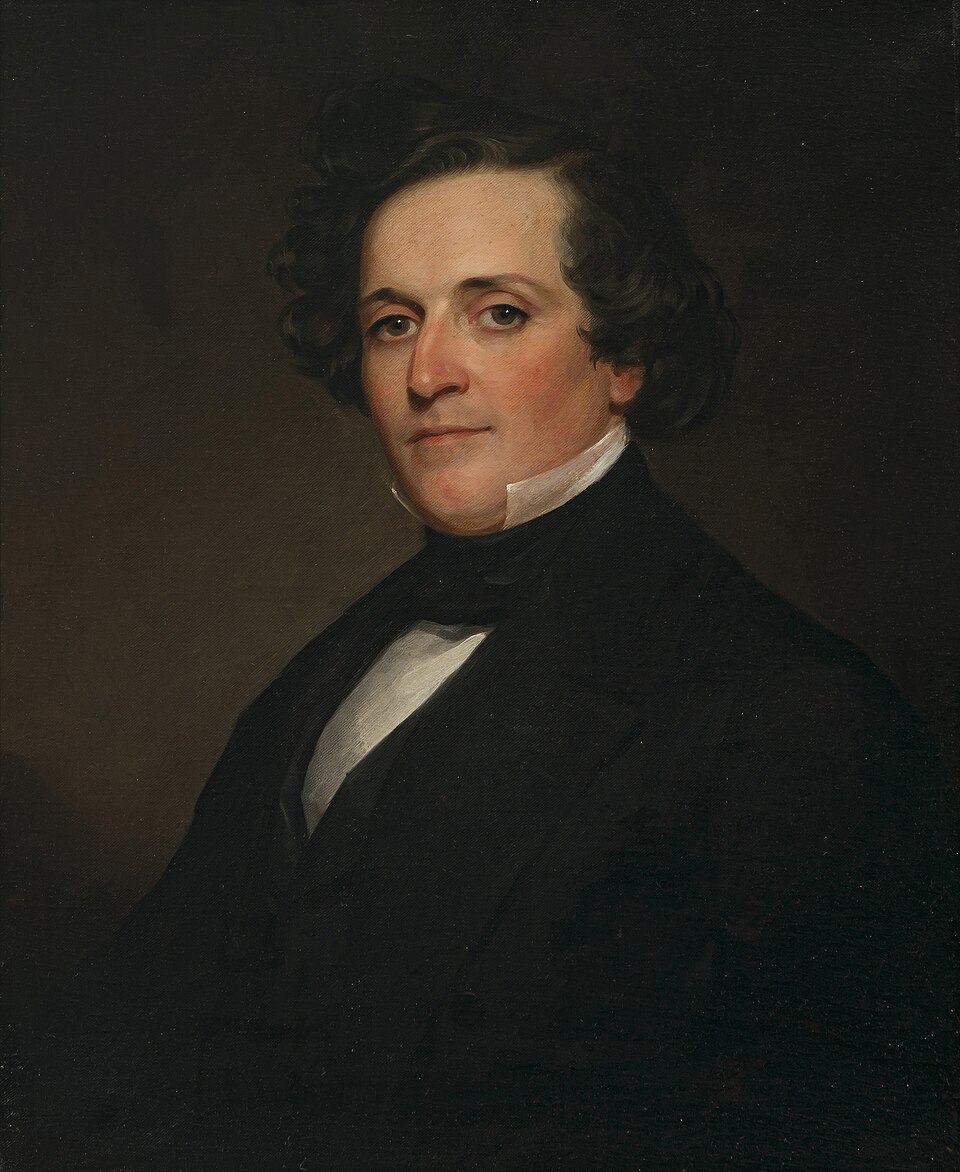
Felix Mendelssohn was the most precocious composer in European history. He wrote the String Octet, Op. 20 — one of the most perfect chamber works of the nineteenth century — when he was sixteen years old. The next year, at seventeen, he wrote the overture A Midsummer Night’s Dream (the Wedding March would be added seventeen years later, as part of a complete incidental-music score for the play). At twenty, in March 1829, he conducted from memory the first performance in a hundred years of Bach’s St Matthew Passion at the Berlin Sing-Akademie — an act of musical resurrection that single-handedly began the modern Bach revival. He was 20. The Mendelssohn one meets in the music of his thirties is not even fully grown.
He was born in Hamburg on 3 February 1809, the second of four children of the banker Abraham Mendelssohn and Lea Salomon. His grandfather was the philosopher Moses Mendelssohn (1729–1786), one of the central figures of the German Jewish Enlightenment; his father had had the family baptised Christian when Felix was seven, taking the additional surname Bartholdy (after a sister-in-law’s husband) to mark the conversion. The Mendelssohn-Bartholdy household in Berlin — Leipziger Strasse 3, into which the family moved in 1825 — became the most cultivated upper-bourgeois salon in Prussia. Hegel, Heine, the Humboldt brothers, Klingemann, and the young Robert Schumann all passed through it.
The boy Felix was tutored at home with his older sister Fanny (also a composer of remarkable gifts; we will return to her), and was a public performer in Berlin from age nine. Goethe invited him to Weimar at age twelve and called him “our young Mozart” in conversation with Zelter the next morning. The comparison was not unjust. Felix’s father, Abraham, made him perform Mozart’s K. 466 piano concerto at the Berlin Singakademie at age fourteen — an experience that, by Felix’s own account, terrified him out of public solo playing for two years.
The 1829 Bach revival

In December 1827, Mendelssohn’s grandmother Bella Salomon — herself Moses Mendelssohn’s daughter-in-law — gave the eighteen-year-old grandson a hand-copied score of J. S. Bach’s St Matthew Passion that had been preserved in the family library. The work had not been performed in its entirety in one hundred years — since Bach’s own final 1736 Leipzig performance. Felix decided to revive it.
The cuts he made are famous: he removed eight arias, six recitatives, half of the turbae choruses, and almost all of the second-half chorales. He transposed several arias for available singers. He doubled the male chorus to forty voices so the Sing-Akademie’s audience could hear the polyphony. He conducted with a baton, from memory, with the score open on a desk facing him. The first performance was on 11 March 1829, age twenty.
The Berlin Sing-Akademie hall was full; a second performance had to be added two weeks later. Mendelssohn’s apocryphal remark as he came off the podium, recorded by his fellow conductor Eduard Devrient, has entered every history of the revival:
Just think — to bring back the Bach for the Berliners, it took an actor and the son of a Jew!
— Felix Mendelssohn, as reported by Eduard Devrient, Meine Erinnerungen an Felix Mendelssohn-Bartholdy, Leipzig 1869
The remark is almost certainly Devrient’s polish of something less quotable. The substance is accurate. Mendelssohn had brought back, single-handedly and at twenty, the work that would within fifty years be considered the central Christian musical statement of the modern era.
The Bach manuscripts Mendelssohn worked from were largely from the Berlin Singakademie’s holdings — assembled in the 1790s by the academy’s then-director Carl Friedrich Zelter, Mendelssohn’s own teacher and friend of Goethe. Zelter died in May 1832, three years after the Passion revival, and is one of the unsung custodians who made it possible.
Leipzig, the Gewandhaus, and the organ sonatas
From 1835 Mendelssohn was music director of the Leipzig Gewandhaus Orchestra — Germany’s most important concert organisation. He programmed the music he believed in: Bach, Handel, Beethoven (especially the late symphonies), Schubert (the C-major Symphony received its world premiere under Mendelssohn in 1839, twelve years after Schubert’s death, from a score Schumann had retrieved from Schubert’s brother), and his contemporary Robert Schumann. Leipzig under Mendelssohn became the centre of German musical conservatism in the best sense — the place where the classical tradition was being curated and extended, not blown apart.
In 1843 he founded the Leipzig Conservatory — the first modern music conservatory in Germany — recruiting Schumann, the violinist Ferdinand David, and others as faculty. The school survives as the Hochschule für Musik und Theater “Felix Mendelssohn Bartholdy” today.
The six Organ Sonatas, Op. 65 were composed for an English commission in 1844 from the London publisher Coventry & Hollier, who had asked for “three or four voluntaries.” What they got, eighteen months later, was six fully-worked-out sonatas of two to five movements each — the most ambitious organ music written by any composer since Bach’s death. The sonatas are saturated with Lutheran chorale material (Op. 65 No. 3 on Aus tiefer Not, Op. 65 No. 6 on Vater unser im Himmelreich), with strict fugues, and with a romantic-symphonic dimension nobody else writing for organ in 1844 was bringing to the instrument. Brahms knew them by heart. Reger’s Op. 27 chorale fantasias are unimaginable without them.
England, Queen Victoria, the Wedding March
Mendelssohn made ten visits to England between 1829 and 1847. Each was a public event: the Hebrides Overture (Op. 26) was composed on the first trip after he visited Fingal’s Cave on Staffa in August 1829 and wrote the opening theme in a letter sent home from the island the same day (“In order to make you understand how extraordinarily the Hebrides affected me, the following came into my mind there” — followed by twenty-one bars of music).
The fifth visit in 1842 included a private audience with the young Queen Victoria and Prince Albert at Buckingham Palace. Mendelssohn played his own Songs Without Words on the piano, accompanied Victoria singing the songs of her cousin Albert and her cousin-by-marriage Mendelssohn, and (per his own letter to his mother that night) was charmed by the queen’s playing. Victoria later asked him to look over her own piano-singing technique. The friendship was real and lasted for the remaining five years of his life.
The famous Wedding March — the music played in the second half of any traditional Christian wedding in the English-speaking world — was originally composed in 1842 as Act V of the complete incidental-music score for A Midsummer Night’s Dream, the same project of which the seventeen-year-old’s 1826 overture had been the first piece. It entered general wedding use after the marriage of Victoria’s daughter Princess Victoria to Frederick of Prussia in January 1858, where it was used as the recessional. The princess had specifically asked for it.
Fanny, the death, the end
The most devastating event of Mendelssohn’s last years was the death of his sister Fanny Mendelssohn Hensel — herself a major composer, of more than 460 surviving works, whose music Felix had encouraged in private but discouraged in public on the grounds that publication was “not the role of a married woman.” Fanny died of a stroke during a rehearsal of one of her own oratorios on 14 May 1847, age forty-one. Felix collapsed when the news reached him; he wrote no music for six weeks.
When he resumed composition it was on the String Quartet in F minor, Op. 80 — six movements of grief and rage, the most emotionally extreme music he ever wrote. Within six months he himself had suffered two strokes and was dead. He died at his house at Goldschmidtstrasse 12, Leipzig, on 4 November 1847, age thirty-eight.
The funeral, on November 7, was the largest public musical event in nineteenth-century Leipzig — Schumann was a pallbearer, the city’s churches rang their bells in succession, the body was taken by train to Berlin and buried at the Dreifaltigkeitskirche cemetery beside his sister. Brahms, then a fourteen-year-old in Hamburg, heard the news and wrote in his diary: “Today the world has lost its only Mozart since Mozart.”
Mendelssohn’s reputation in the German lands suffered terribly under the Wagner-led nineteenth-century reaction against Jewish musicians, then again — and far more violently — under the National Socialist proscription of his music between 1933 and 1945. The 1936 demolition of his Leipzig statue and the active suppression of his works during the war years contributed to a long German neglect that lasted into the 1970s. The Anglo-American world never forgot him; the German rediscovery is still in progress.
What he left was the rebuilt Bach repertory, the Leipzig Conservatory, the six Organ Sonatas, the Octet, the Italian and Scottish symphonies, the Songs Without Words, the Elijah oratorio, and the strongest evidence in nineteenth-century music for the proposition that the Bach tradition could be carried forward, not merely revived.