A guide to
César Franck
Liège 1822 — Paris 1890
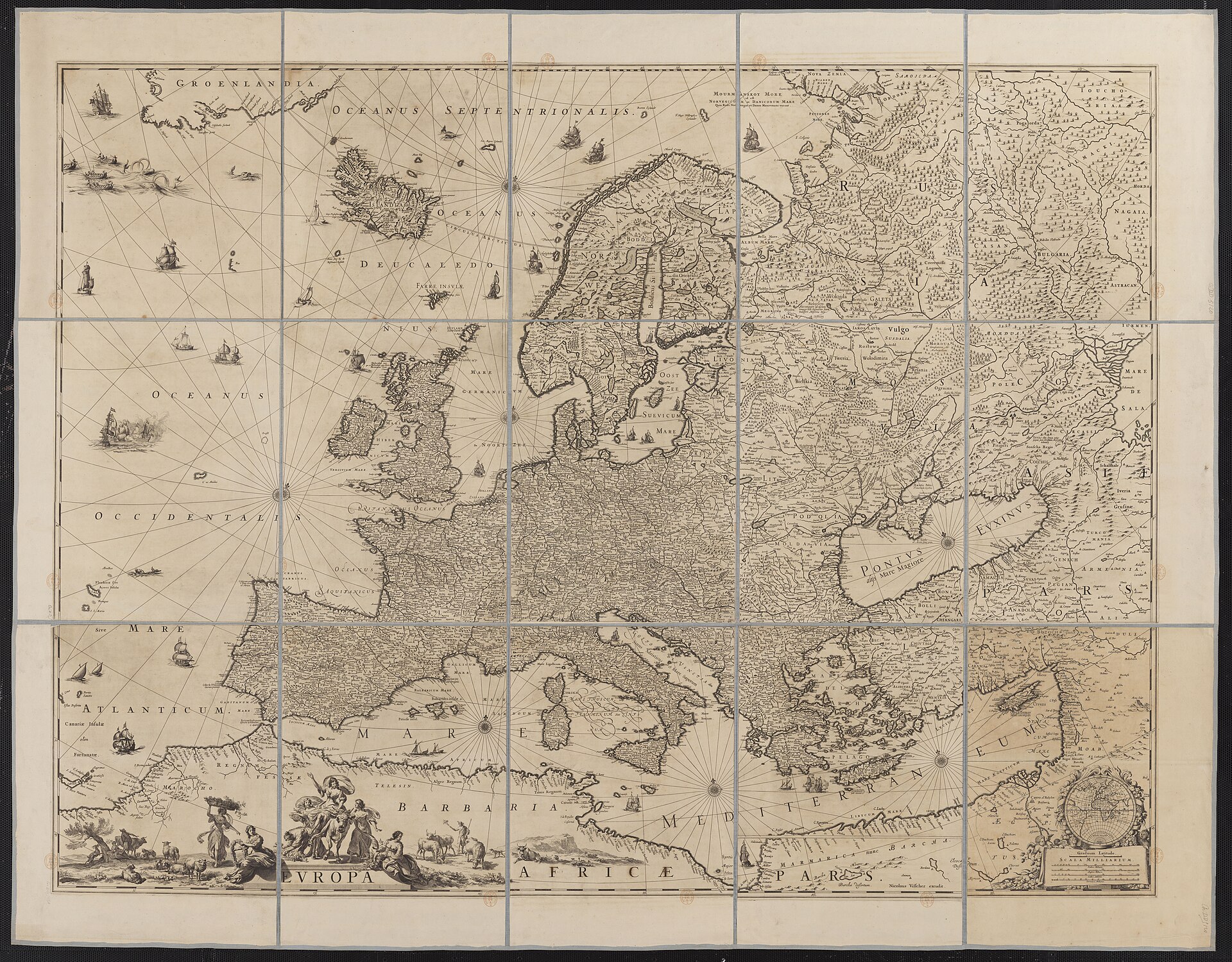
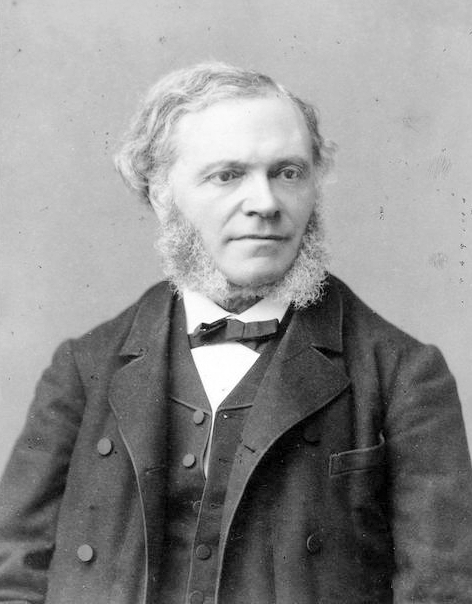
César Franck was the great late bloomer of the Romantic century — a Belgian-born organist who spent forty years as a working church musician in Paris, almost unknown as a composer, and then in his last fifteen years produced the body of work that made him the father of modern French music. He wrote a symphony, a string quartet, the violin sonata, and the oratorio Les Béatitudes; but his life was lived at the keyboard, and it is in the organ and piano works — the six great organ pieces, the Trois Chorals, the two paired piano triptychs — that the essential Franck speaks. For the organ he is the indispensable figure between Bach and the twentieth century; the whole French organ school that followed him grew from his bench at Sainte-Clotilde.
He was born on 10 December 1822 at Liège, in the French-speaking Walloon country that is now Belgium, the son of an ambitious bank clerk who saw in his two musical sons a source of family fortune. César was drilled hard, paraded as a child prodigy, and in 1836 the family emigrated to Paris, where the following year he entered the Conservatoire. He won prizes in piano, organ and counterpoint, and might have taken the Prix de Rome; but his father withdrew him from the school in 1842 to launch him on a virtuoso’s career, dragging the family back to Belgium and then to Paris again. The plan failed. Franck had no taste for the touring life his father imagined, and in 1848 — marrying against the family’s wishes — he broke free of it and settled into the obscure, laborious existence of a Parisian organist and teacher.
Sainte-Clotilde and the Cavaillé-Coll organ
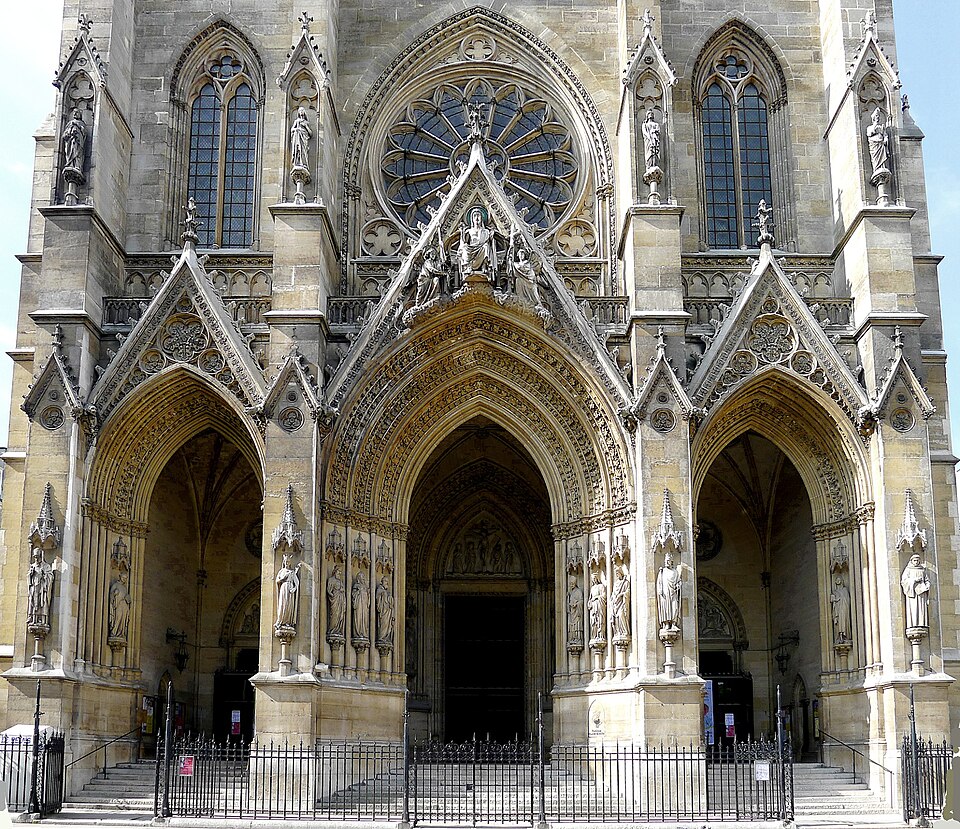
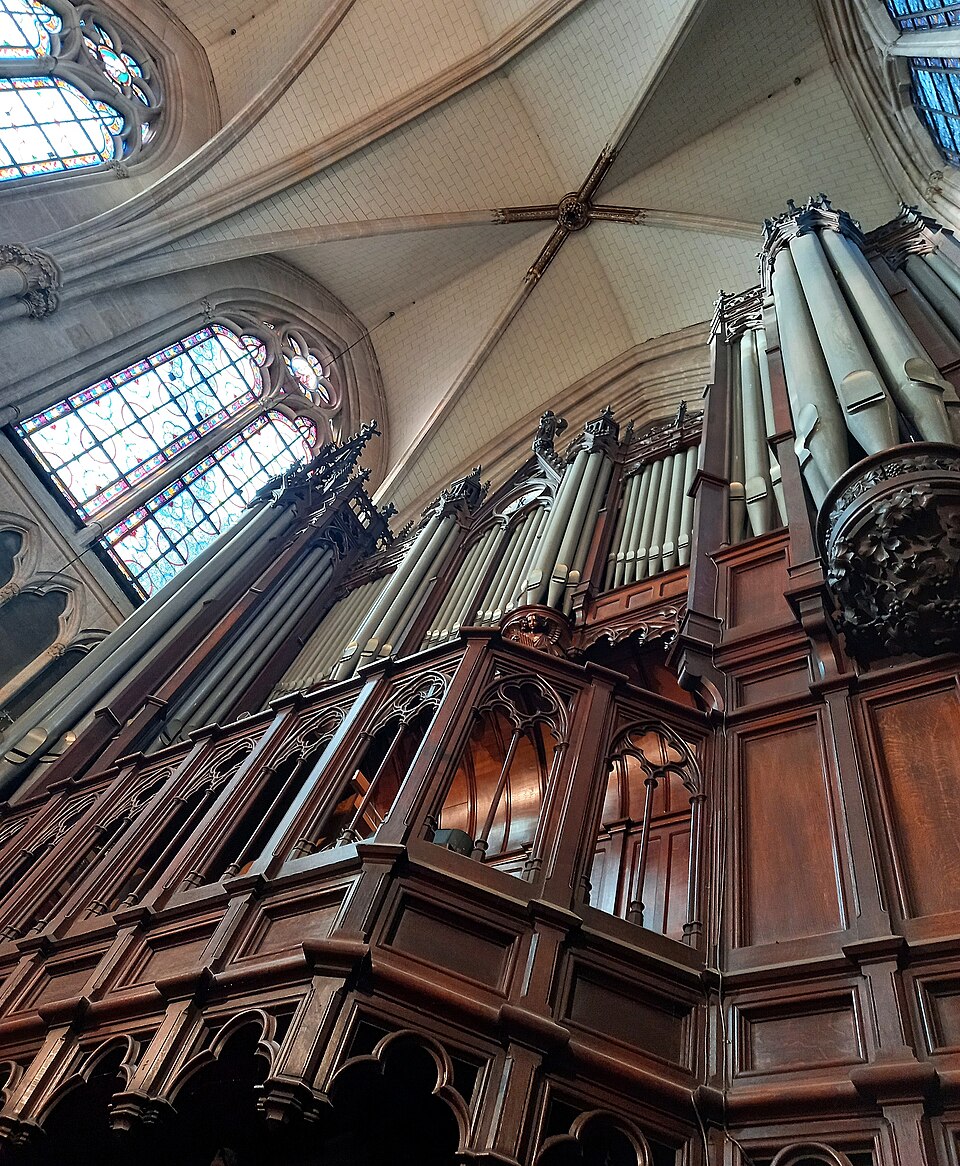
The turning point of his life was an instrument. When the new basilica of Sainte-Clotilde was finished in the 1850s, the great organ-builder Aristide Cavaillé-Coll — then at the height of his powers — built one of his masterpieces for it, a “symphonic” organ of unprecedented orchestral colour. Franck, choir-master at the church since 1858, won the post of titular organist, and there, as Vincent d’Indy wrote, “in the dusk of this organ-loft” he spent the best part of his life. Every Sunday and feast-day — and, towards the end, every Friday morning too — he climbed the dark spiral stair to the loft and poured out improvisations that those who heard them ranked above many a written composition.
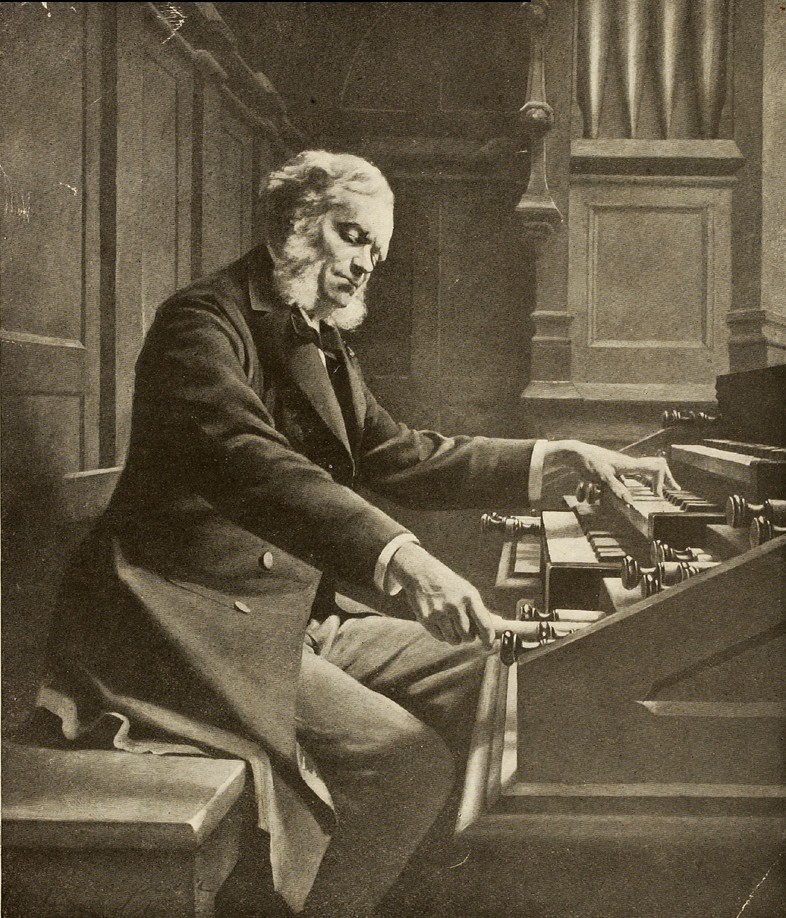
It was his improvising, not his published music, that first won him the admiration of the great. On 3 April 1866, Franz Liszt climbed to the loft as Franck’s sole listener and came away, d’Indy records, “lost in amazement, and evoking the name of J. S. Bach in an inevitable comparison.” The comparison would follow Franck to the end of his life and beyond. He loved the instrument almost as a living thing; “if you only knew how I love this organ,” he told the curé of Sainte-Clotilde, “it is so supple beneath my fingers and so obedient to all my thoughts.”
On April 3, 1866, Franz Liszt, who had been his sole listener, left the church of Sainte-Clotilde lost in amazement, and evoking the name of J. S. Bach in an inevitable comparison.
— Vincent d’Indy, César Franck, 1906 (English translation by Rosa Newmarch)
The organ symphonist
The Cavaillé-Coll instrument did more than give Franck a voice; it gave him a new way of composing. d’Indy dated from the Sainte-Clotilde years what he called Franck’s “second musical period” and “the first manifestations of his true innovating genius” — the six great organ pieces published as Opp. 16 to 21. Chief among them is the Grande pièce symphonique, Op. 17, a three-movement symphony in F-sharp minor conceived for the organ alone. Franck believed, d’Indy explains, that one should build symphonies from the varied timbres of a Cavaillé-Coll rather than yoke organ to orchestra, where one force always overshadows the other — and the result was, in d’Indy’s judgement, “the first of all modern organ symphonies.” Its finale recapitulates the chief ideas of the earlier movements and carries the opening theme, transformed into the major, through fugal development to a triumphant close: the cyclic method that would become Franck’s signature.
Beside the symphonic ambition of Op. 17 stand smaller jewels. The Prélude, fugue et variation, Op. 18, dedicated to Camille Saint-Saëns, opens with a tender 9/8 melody and closes with a fugue that, against the dry classroom fugues of the day, has — in d’Indy’s phrase — “real charm and melody”; Franck loved it enough to arrange it himself for harmonium and piano. The Pastorale, Op. 19, the Prière, Op. 20 and the Final, Op. 21 complete the set, the last of them admired by d’Indy for its “firm, Beethoven-like structure.” A decade later came a second organ summit: the Trois Pièces pour grand orgue, written expressly for the inauguration of the colossal new organ at the Trocadéro during the Exhibition of 1878. They include the noble Pièce héroïque and the Cantabile — a “suave and devotional” canon, d’Indy noted, written to show off the warm new clarinet stop of Cavaillé-Coll’s instrument.
The piano triptychs
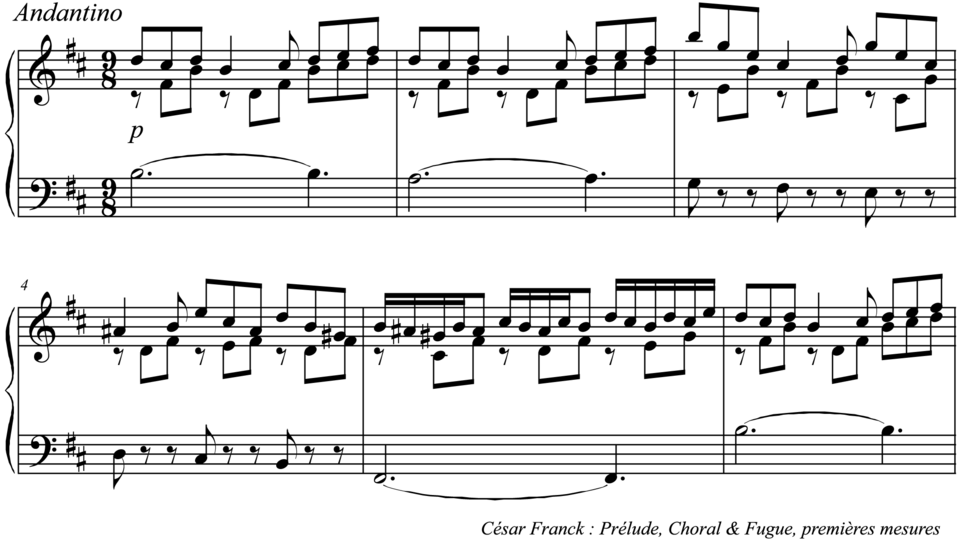
Franck wrote little for solo piano after his prodigy years, but what he wrote at the end of his life renewed the instrument’s literature. The Prélude, choral et fugue (1884) grew out of an abandoned set of variations called Les Djinns. Franck began, d’Indy tells us, intending “a prelude and fugue in Bach’s style,” then decided to link them with a chorale “whose melodic spirit would pervade the entire work” — so that, in a superb final peroration, prelude, chorale and fugue sound together. The tolling chorale carries what d’Indy thought a “probably unconscious” echo of the bell-theme from Wagner’s Parsifal. Marie Poitevin gave the première for the Société Nationale on 24 January 1885.
Its companion, the Prélude, aria et final (1888), was dedicated to the pianist Mme Bordes-Pène, who first played it at a Société Nationale concert on 12 May 1888. Where the earlier work ends in triumph, this one closes softly, the melody seeming to evaporate. Together, d’Indy argued, the two triptychs “gave a revivifying impulse to pianoforte literature” at a moment when it seemed to be “perishing between virtuosity and emptiness” — and both, with their cyclic returns and their fusion of Baroque forms with Romantic harmony, carried into the piano the methods Franck had forged at the organ.
The Conservatoire, and “Father Franck”
In 1872 Franck succeeded his old teacher François Benoist as professor of organ at the Paris Conservatoire. Officially he taught organ; in practice his class became a school of composition, and around him gathered the most gifted young French musicians of the age — Vincent d’Indy, Henri Duparc, Ernest Chausson, and others — who revered him so completely that they called him “Father Franck” (Pater seraphicus) and formed, half in jest, la bande à Franck. To them he was, as the pupil Alexis de Castillon put it, a “seraphic soul”: patient, devout, wholly without worldly ambition.
The musical establishment was less generous. When a chair in composition fell vacant the ministry passed Franck over for a lesser man; the official world preferred to make him, by way of compensation, an “officer of the Academy” — a decoration, d’Indy noted with bitterness, shared with “the butcher, the baker, the candlestick-maker.” His pupils were indignant; Franck only answered, “Be calm, be calm.” Recognition, when it came, came late and grudgingly, and much of it after his death.
The Trois Chorals, and the end
The last year of Franck’s life held both his first taste of public triumph and his death. In the spring of 1890 audiences at last began to warm to him; “the public is beginning to understand me,” he said with naïve pride after a success in his sixty-ninth year. Then, one evening in May 1890, on his way to a pupil, he was struck in the side by the pole of a passing omnibus. He fainted on arrival but insisted on going through the second-piano part of his Variations symphoniques before going home, exhausted. Refusing to rest, he kept up his punishing routine through the summer — and it was in that summer, already ailing, that he composed the Trois Chorals, the three great chorale-fantasias for organ that crown his life’s work.
They were, d’Indy wrote, his “swan-song.” Conceived in the grand variation form he had drawn from Beethoven, they are music of “powerful construction” possessing, in the words of the critic Camille Mauclair (quoted by d’Indy, 1906), “a magnificent rectitude directly proceeding from Bach.” Franck dedicated them to three fellow organists — Alexandre Guilmant, Théodore Dubois and Eugène Gigout. Shortly before the end he dragged himself once more up to the loft at Sainte-Clotilde to write down the exact stop combinations, so that the works should survive as he heard them. In the autumn pleurisy set in, complicated by the untreated injury from the accident, and he died in Paris on 8 November 1890. The manuscript of the Chorals, d’Indy records, was lying on his death-bed when the priest of Sainte-Clotilde came to bring him the last rites.
Shortly before his death he wished to drag himself once more to his organ at Sainte-Clotilde in order to write down the proper combination of stops for the three beautiful Chorales that — like J. S. Bach a hundred and thirty years earlier — he left as a glorious musical testament.
— Vincent d’Indy, César Franck, 1906 (English translation by Rosa Newmarch)
Legacy
Franck’s fame began, in earnest, the day he died. The pupils of la bande à Franck carried his cyclic method and his fervent, chromatic idiom into the next generation, and through Vincent d’Indy — who founded the Schola Cantorum partly to perpetuate the master’s teaching and wrote the biography on which all later accounts depend — Franck became the fountainhead of modern French music. For the organ his line of descent is unbroken: his successors at the great Parisian organs, and the pupils of his pupils, built on his Trois Chorals the whole French symphonic-organ school that runs on into the twentieth century. What he handed forward was the conviction, shared across the Rhine by Brahms and Reger, that the old forms — chorale, fugue, variation — were not exhausted but inexhaustible, and that the organ of Cavaillé-Coll could speak, like Bach’s, with the voice of a whole orchestra. Liszt had named the comparison in 1866; the Trois Chorals made it the truth.