A guide to
Olivier Messiaen
Avignon 1908 — Clichy (Paris) 1992
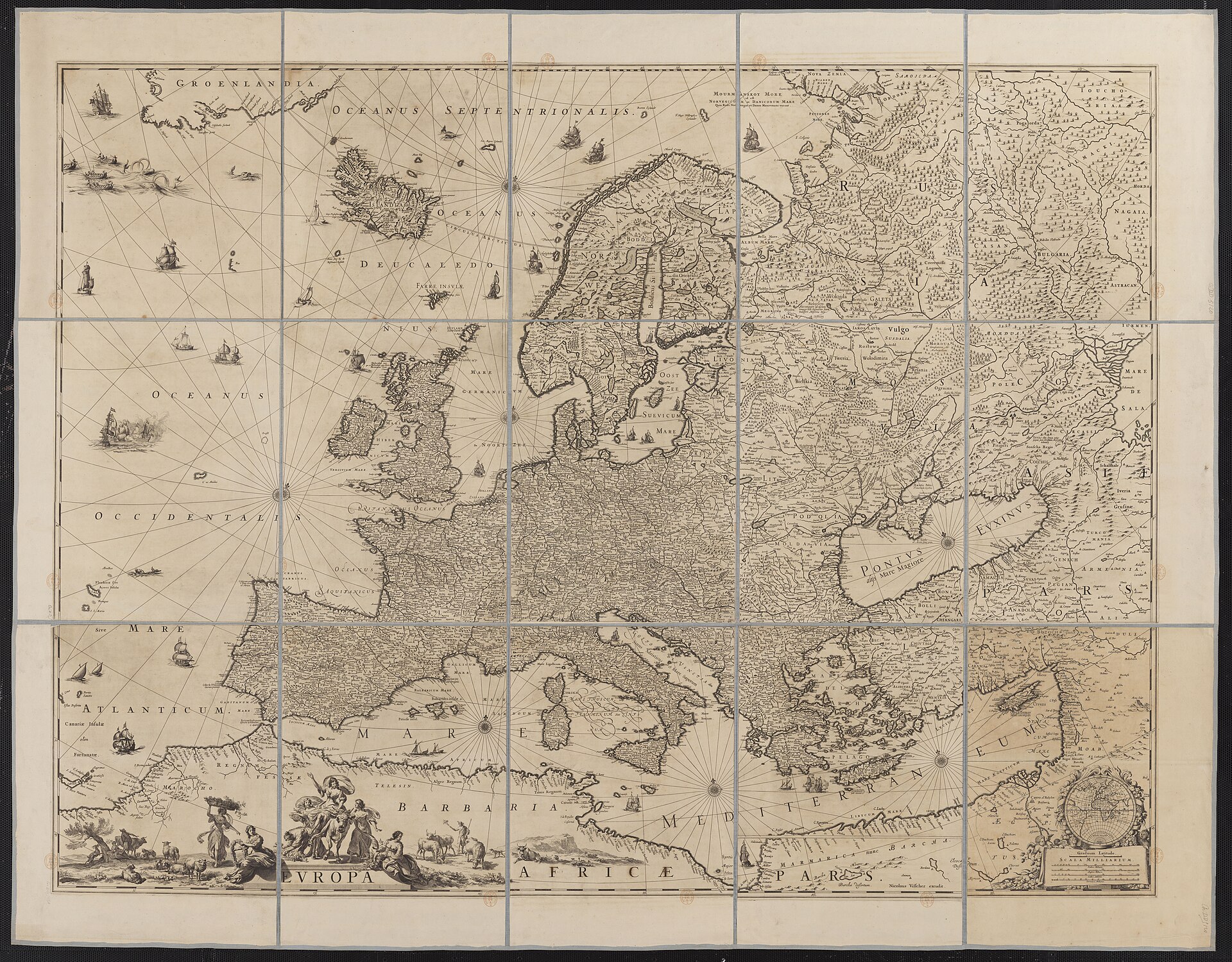
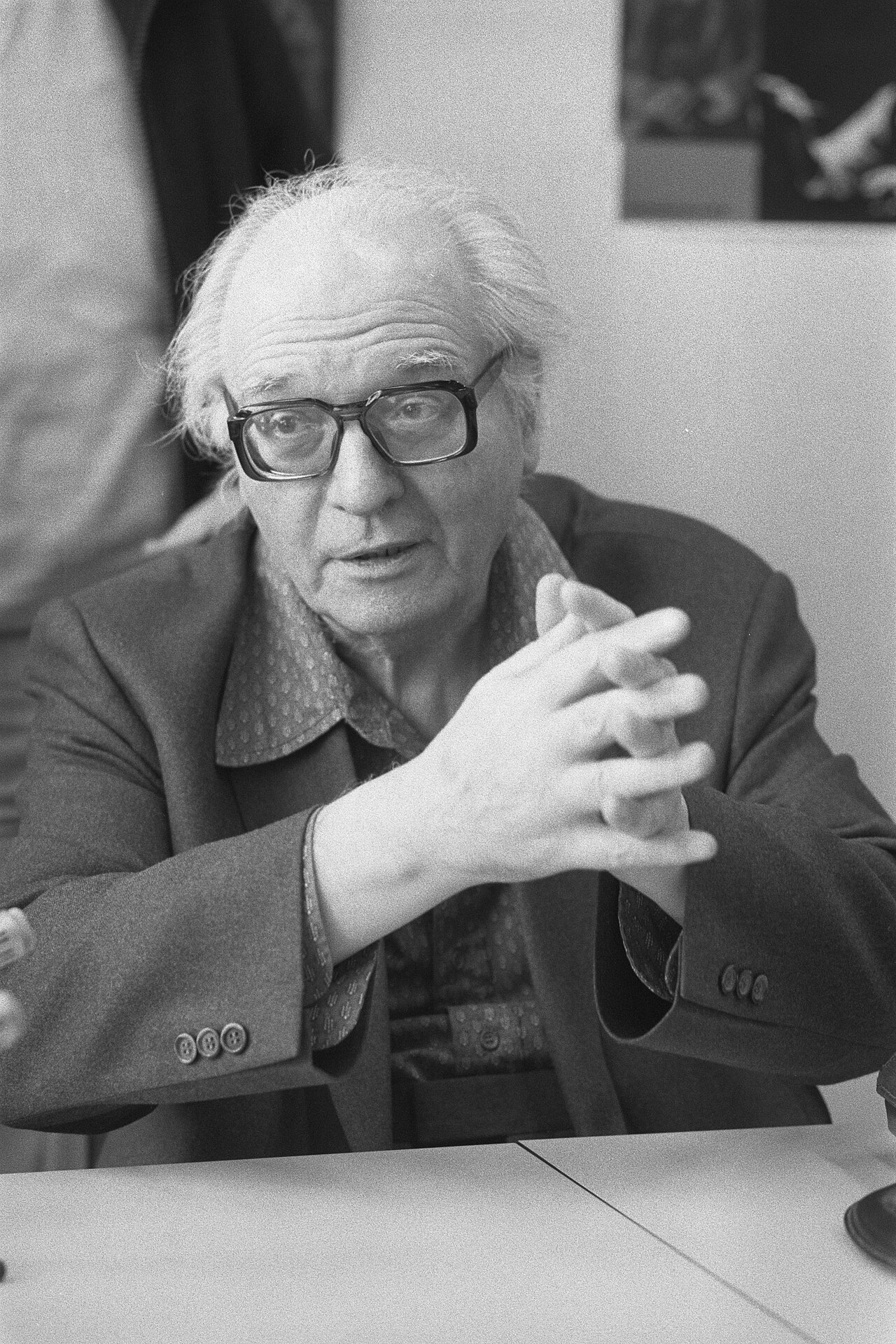
Olivier Messiaen was the great visionary of twentieth-century music — composer, organist, ornithologist, and the teacher from whose Paris classroom the postwar avant-garde poured out. He was born into words: his mother was the poet Cécile Sauvage, who wrote a cycle of poems, L’âme en bourgeon, to the child she was carrying; his father, Pierre Messiaen, was a teacher of English who translated the complete plays of Shakespeare into French. Out of that household came a musician whose art rested on four pillars he never disowned — an unshakable Catholic faith, an absolute ear for birdsong, a synaesthete’s vision of sound as colour, and a wholly new conception of musical rhythm. For sixty-one years he sat at the same organ in the same Paris church, and from that loft, and from his Conservatoire class, he reshaped what European music could be.
He entered the Paris Conservatoire in 1919, aged eleven, and stayed almost a decade, gathering prize after prize. His teachers were among the finest in France: Paul Dukas for composition, Marcel Dupré for organ, and Maurice Emmanuel — from whom he took a lasting fascination with ancient Greek metres and plainchant. Already as a student he was writing the music that would announce him: the 8 Préludes for piano (1928–29) and, for the instrument that would define his life, the organ Diptyque (1930), which he dedicated to Dukas and Dupré.
The colours of sound
What set Messiaen apart from the first was a faculty most listeners never possess: he saw colours when he heard music. Chords, modes and combinations of sounds appeared to him as bands and complexes of colour — not before his eyes but in the mind — and he spoke of this synaesthesia all his life, most fully in his late conversations with the critic Claude Samuel. It was no mere curiosity; it governed how he built harmony. His modes of limited transposition — scales that can be shifted only a few times before repeating — were chosen, he said, for the specific colours they threw off, and he would describe a passage as “blue-violet” or “gold and brown” as another composer might describe a key.
Underneath the colour lay the faith. Messiaen was a devout Catholic from childhood, and he insisted that the deepest purpose of his music was theological, not decorative:
The illumination of the theological truths of the Catholic faith is the first aspect of my work, the noblest, and no doubt the most useful and most valuable — perhaps the only one I won’t regret at the hour of my death.
— Olivier Messiaen, preface to Technique de mon langage musical, 1944
The organ loft of the Trinité
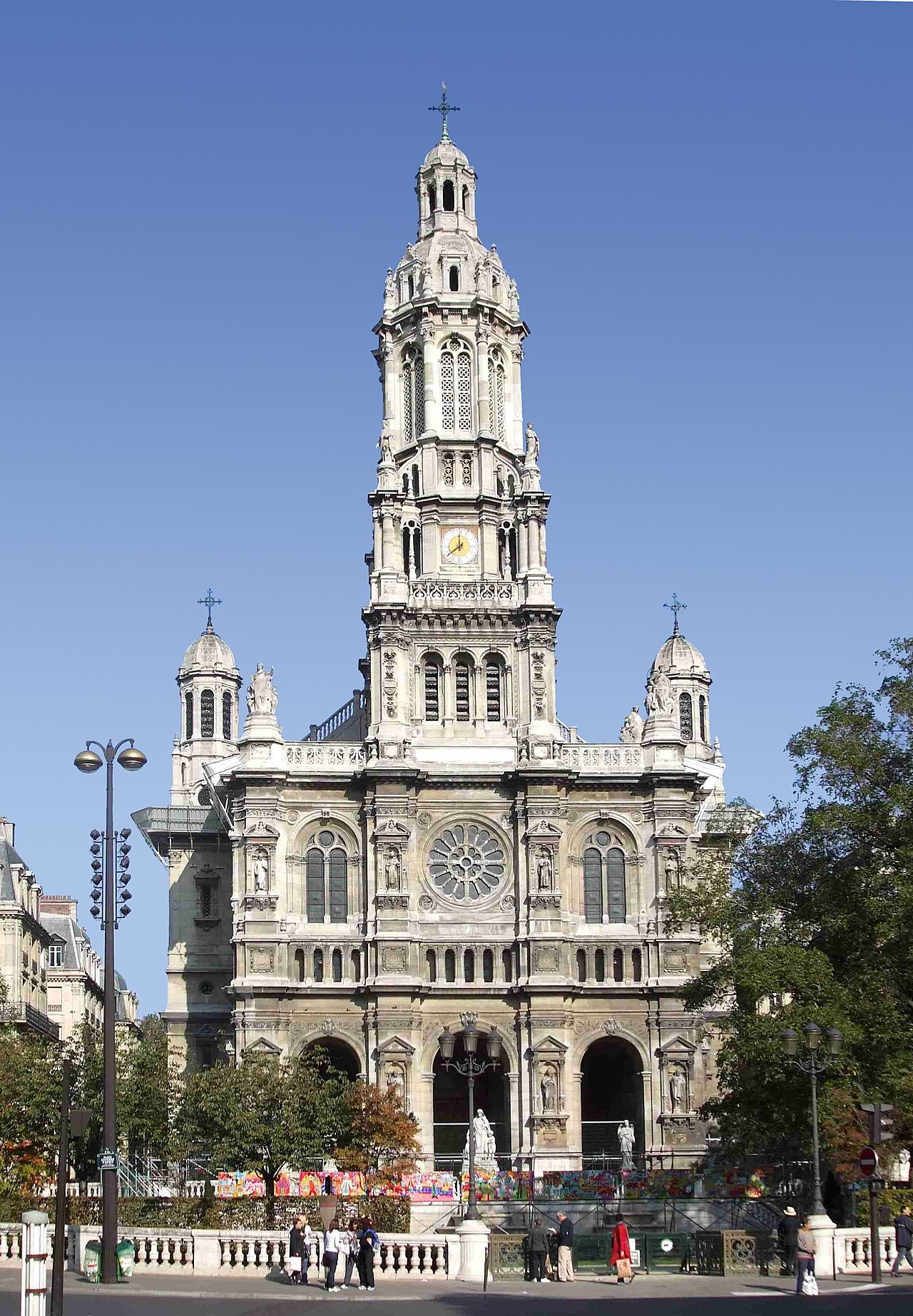
In 1931, barely out of the Conservatoire and only twenty-two, Messiaen was appointed titular organist of the Église de la Sainte-Trinité in Paris. He would hold the post for sixty-one years, until his death — one of the longest tenures in the history of any great church. The instrument was a grand symphonic organ in the line of Aristide Cavaillé-Coll, the same kind of one-man orchestra that César Franck and Louis Vierne had commanded across the city; week after week Messiaen improvised at Mass and tried out, in sound, the language he was forging on paper.
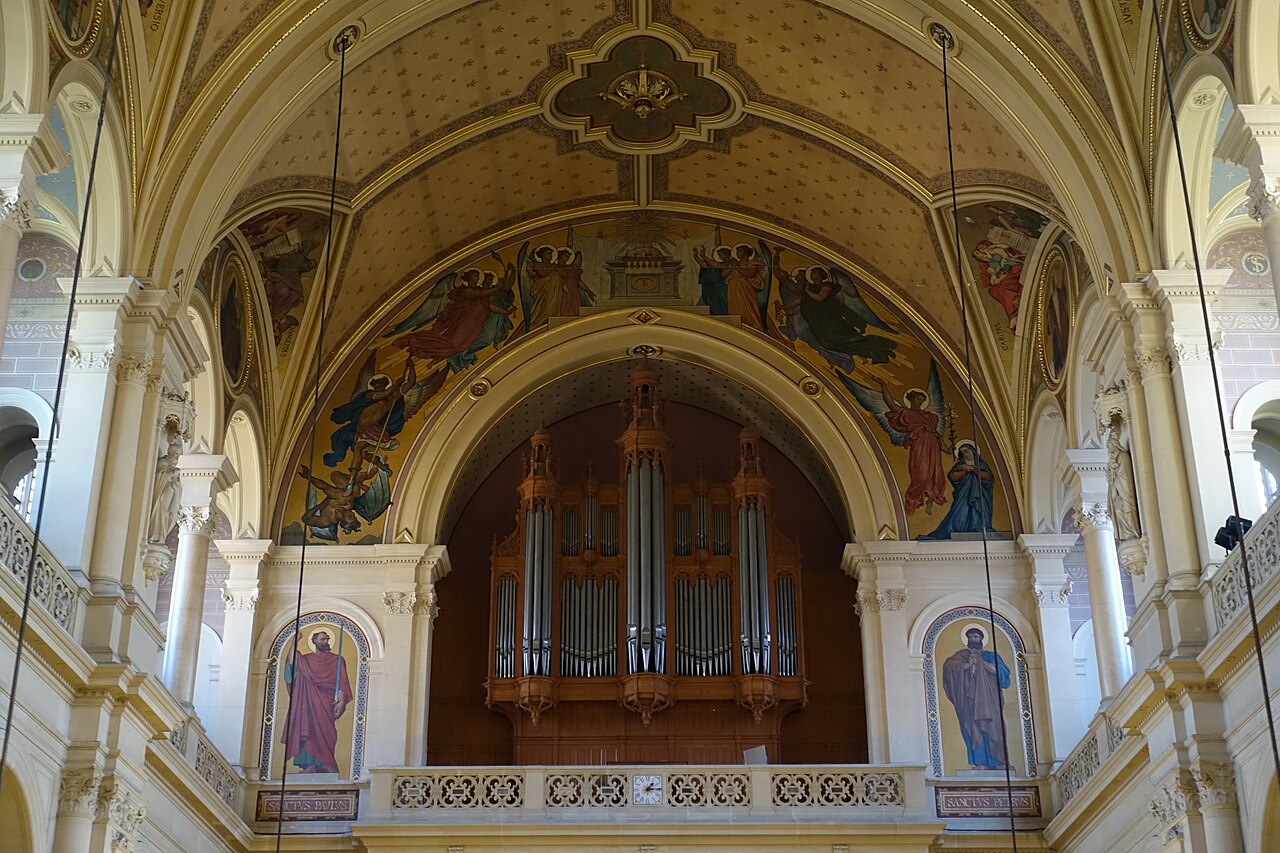
The organ works that came from that loft are the backbone of the twentieth-century repertoire. The earliest published one, Le Banquet céleste (1928), is famous for its almost motionless slowness — a single breath of communion stretched over minutes. Then came the cycles: L’Ascension (in its organ version of 1933–34), the nine meditations of La Nativité du Seigneur (1935), and Les Corps glorieux (1939), all of them mapping points of Catholic doctrine — the Incarnation, the Resurrection, the glorified body — onto his modal, bird-flecked, colour-charged sound-world. After the war he pressed further into rhythm and birdsong with the Messe de la Pentecôte (1949–50) and the Livre d’orgue (1951–52), and crowned the line with the vast Méditations sur le mystère de la Sainte-Trinité (1969) and the late Livre du Saint Sacrement (1984). No composer since Bach has given the organ so large a body of central work.
Birdsong
The second of Messiaen’s obsessions was the song of birds. He called himself an ornithologist as readily as a composer, and he meant it: notebook in hand, he travelled the French countryside — and later much of the world — writing down the songs of individual species in the field, by ear, with the time of day, the habitat and the light all noted alongside the notes. Birds were, he told Claude Samuel, the greatest musicians on the planet, and from the 1950s their songs became his raw material.
The summit of this work is the Catalogue d’oiseaux (1956–58), a cycle of thirteen pieces for solo piano, each a portrait of a French bird set in its landscape and its hour, written for the pianist Yvonne Loriod. Around it stand Réveil des oiseaux and the dazzling Oiseaux exotiques. The birds never leave his later music; they sing through the organ Méditations and the huge orchestral and operatic scores of his last decades.
The end of time
When France fell in 1940, Messiaen — serving as a medical auxiliary — was captured and interned at Stalag VIII-A, a prisoner-of-war camp at Görlitz in Silesia. There, among his fellow prisoners, were a violinist, a clarinettist and a cellist, and for them and himself at the piano he wrote his most famous score, the Quatuor pour la fin du temps (Quartet for the End of Time). It was first performed in the camp in January 1941, before an audience of prisoners and guards. (The quartet is chamber music, not keyboard music — but one of its most rapt movements, the Louange à l’Immortalité de Jésus, is the Paradis of his student organ Diptyque, recalled and transcribed from memory behind the wire.)
Repatriated in 1941, Messiaen was appointed professor of harmony at the Paris Conservatoire, where he would teach for decades. He had already, in 1936, joined André Jolivet, Daniel-Lesur and Yves Baudrier to found La Jeune France, a group dedicated to a humane, spiritual music against the dry neoclassicism then in fashion.
The piano and Yvonne Loriod
If the organ was Messiaen’s liturgical voice, the piano was his laboratory and his most virtuosic instrument. From the Debussy-haunted 8 Préludes of his student years he travelled to Visions de l’Amen for two pianos (1943) and then to the monumental Vingt regards sur l’Enfant-Jésus (1944) — twenty “gazes” upon the infant Christ that demand a transcendental technique and run to over two hours.
These works are inseparable from the pianist who first played most of them, Yvonne Loriod, one of the great virtuosi of the century and, from 1961, Messiaen’s second wife. (His first wife, the violinist Claire Delbos, for whom he wrote tenderly in the 1930s, suffered a long mental decline and died in 1959.) In the Quatre études de rythme (1949–50), one piece — Mode de valeurs et d’intensités — went further than any music before it in organising not just pitch but duration, attack and dynamic by fixed series, and it struck the young composers around him like a thunderclap.
The school and the legacy
No twentieth-century teacher of composition was more consequential. Through Messiaen’s Conservatoire class passed Pierre Boulez, Karlheinz Stockhausen and Iannis Xenakis, among many others — the founders, between them, of integral serialism, electronic music and a new mathematical composition. They took their cues from his analysis of rhythm and his fearless example, even as they struck out in directions he never followed. Yet Messiaen also stood squarely in the older French line of the organ loft, the line of Franck, Widor, Vierne, Dupré and Tournemire, and he handed that tradition forward intact.
He went on composing on the grandest scale to the end — the orchestral Turangalîla-Symphonie, the opera Saint François d’Assise, the late Éclairs sur l’au-delà — and died at Clichy, near Paris, on 27 April 1992. He left behind a body of organ and piano music without rival in his century, and a way of hearing the world — as colour, as birdsong, as a perpetual hymn — that no one before or since has matched.