A guide to
Johann Pachelbel
Nuremberg 1653 — Nuremberg 1706
For three centuries after his death Johann Pachelbel was a footnote in the history of the German organ school — respected by the eighteenth-century cantors who taught from his Magnificat fugues, remembered by the nineteenth-century musicologists who edited a chaconne or two, and otherwise a name to scholars only. In 1968 a French chamber-music conductor named Jean-François Paillard recorded a slow, sentimental, doubled-tempo arrangement of the Canon in D — a piece Pachelbel had written around 1680 as one in a series of trio sonatas for three violins and continuo, performed once at a family event, and never published — and within twenty years it had become the most-played piece of art music on the planet. Approximately every minute of every day, somewhere in the world, a string quartet is playing the opening of Pachelbel’s Canon at a wedding. The composer himself never heard it after about 1700.
This is unfortunate, because Pachelbel wrote roughly five hundred surviving compositions, and the Canon in D — competent journeyman work, no more — is among the least interesting of them.
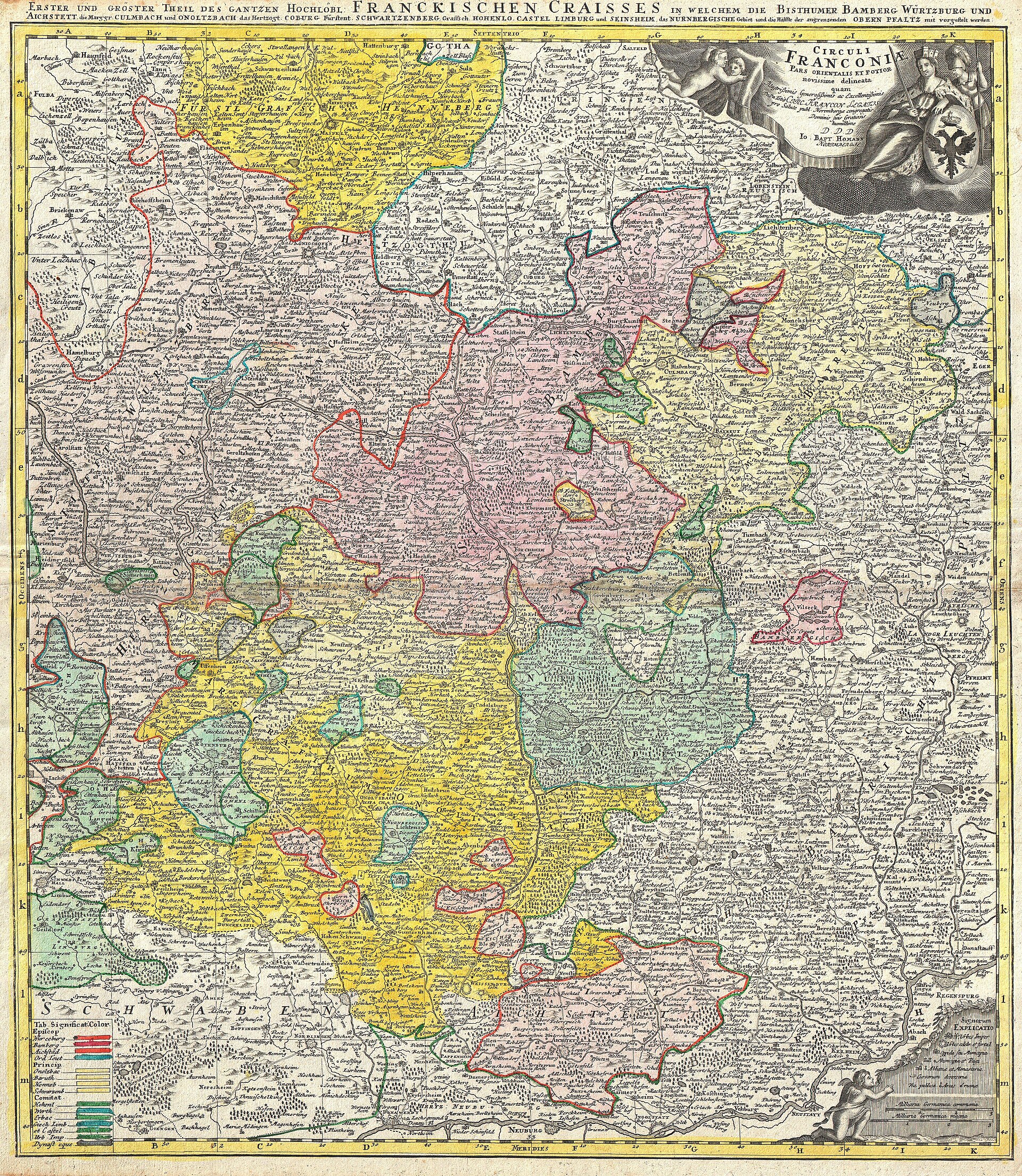
He was born in Nuremberg on 1 September 1653, into a Lutheran family of modest means; his father was a wine dealer. He studied at the Auditorio Aegidiano in Nuremberg, then at the University of Altdorf, then at the Gymnasium Poeticum in Regensburg, where his musical talent was conspicuous enough that the school waived tuition. At twenty he made his way to Vienna as deputy organist at the Stephansdom — at the time the imperial cathedral of Catholic central Europe, packed with the South German and Italian repertory he would absorb for the rest of his life. He returned north as a more sophisticated musician than Lutheran Germany expected.
Erfurt, plague, the Bach connection
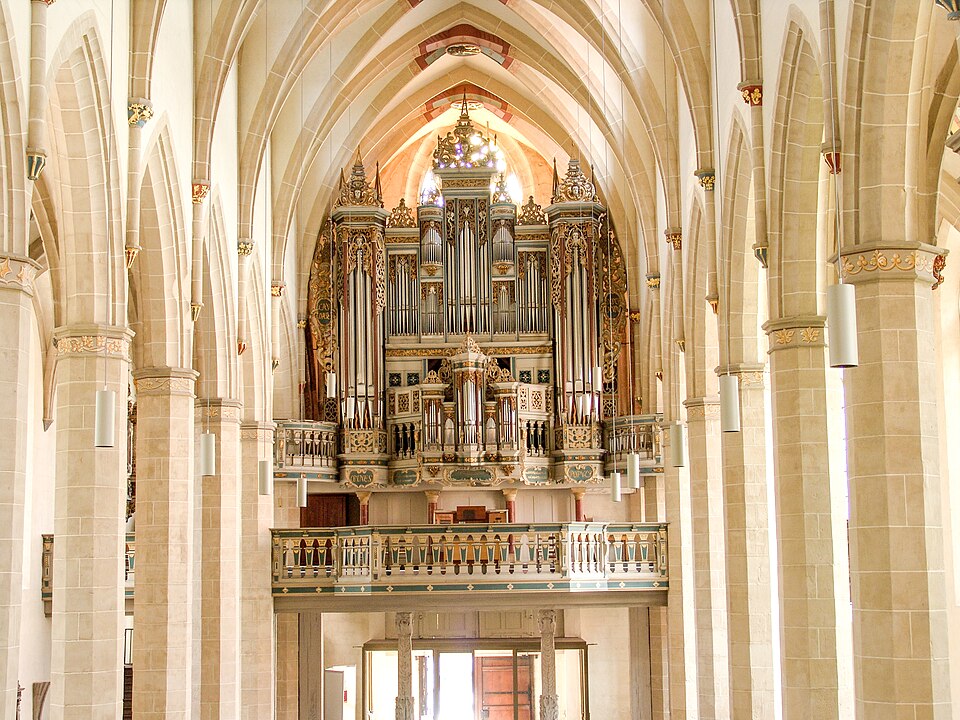
From 1678 he held the organ post at the Predigerkirche in Erfurt — twelve formative years. The contract was bracingly specific: he was forbidden from using “obtuse or unfamiliar harmonies” in the congregational chorale playing, was required to give a single public organ recital each year (free of charge to anyone who came), and was expected to compose a chorale prelude for every Sunday of the church year. The Erfurt years produced his great body of chorale settings — among them the canonic chorales that Bach would later study from Pachelbel’s own students.
The most important of those students was Johann Christoph Bach (1671–1721), elder brother of Johann Sebastian. When the ten-year-old Sebastian was orphaned in 1695 and went to live with this elder brother in Ohrdruf, the manuscripts the boy practised from were largely Pachelbel’s — copied out, taught, and curated by his brother who had spent four years studying with the Erfurt master. Pachelbel is the direct musical grandfather of the Bach we listen to.
The Erfurt years also brought the central trauma of his life. In October 1683 an outbreak of plague swept through the city; within a few weeks his first wife Barbara Gabler and their infant son were both dead. Pachelbel wrote into the title page of a manuscript his mourning: a set of variations on the chorale Wenn mein Stündlein vorhanden ist (“When my last hour is at hand”) — a forty-minute act of grief in the form of fourteen variations. Surviving members of the Bach family at Eisenach took him in temporarily; the following spring he was sufficiently recovered to remarry, this time to Judith Drommer, a member of the Bach family in everything but surname. They would have seven more children.
The Hexachordum and the South German style
The opus magnum of his middle years is the Hexachordum Apollinis (1699) — “the six-stringed lyre of Apollo,” a set of six arias each with five variations on the six hexachord pitches ut, re, mi, fa, sol, la. He published it in Nuremberg in 1699 and dedicated it jointly to two organists he admired: Dieterich Buxtehude (the North German master) and Ferdinand Tobias Richter (the Vienna court organist who succeeded him at the Stephansdom). The double dedication is itself a manifesto — south meets north — and the closing Aria Sebaldina, named for the Nuremberg church that had just engaged him, is a slow F-minor lament-with-variations that is arguably the finest single keyboard piece he wrote.
He also composed, across his career, roughly ninety-five Magnificat fugues — short three- to four-page pieces in each of the eight church tones, intended to be played by an organist to give the boys of the choir their starting pitch for the Magnificat. The collection is the most systematic working-out of the modal fugue in the entire German Baroque, and was used as a pedagogical resource by every German organ teacher from Bach to Brahms.
Last years and the Charleston coda
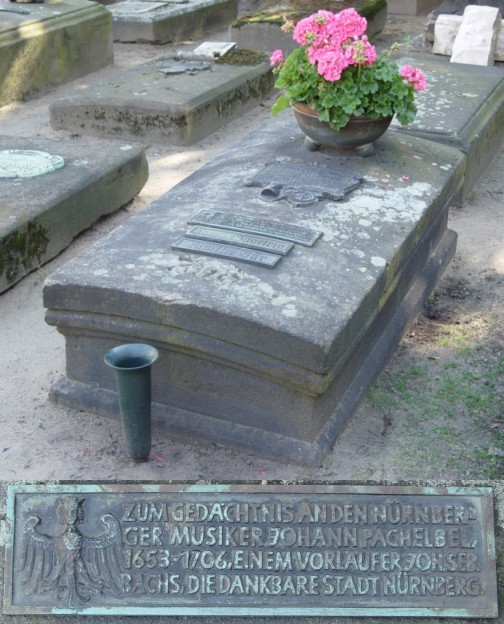
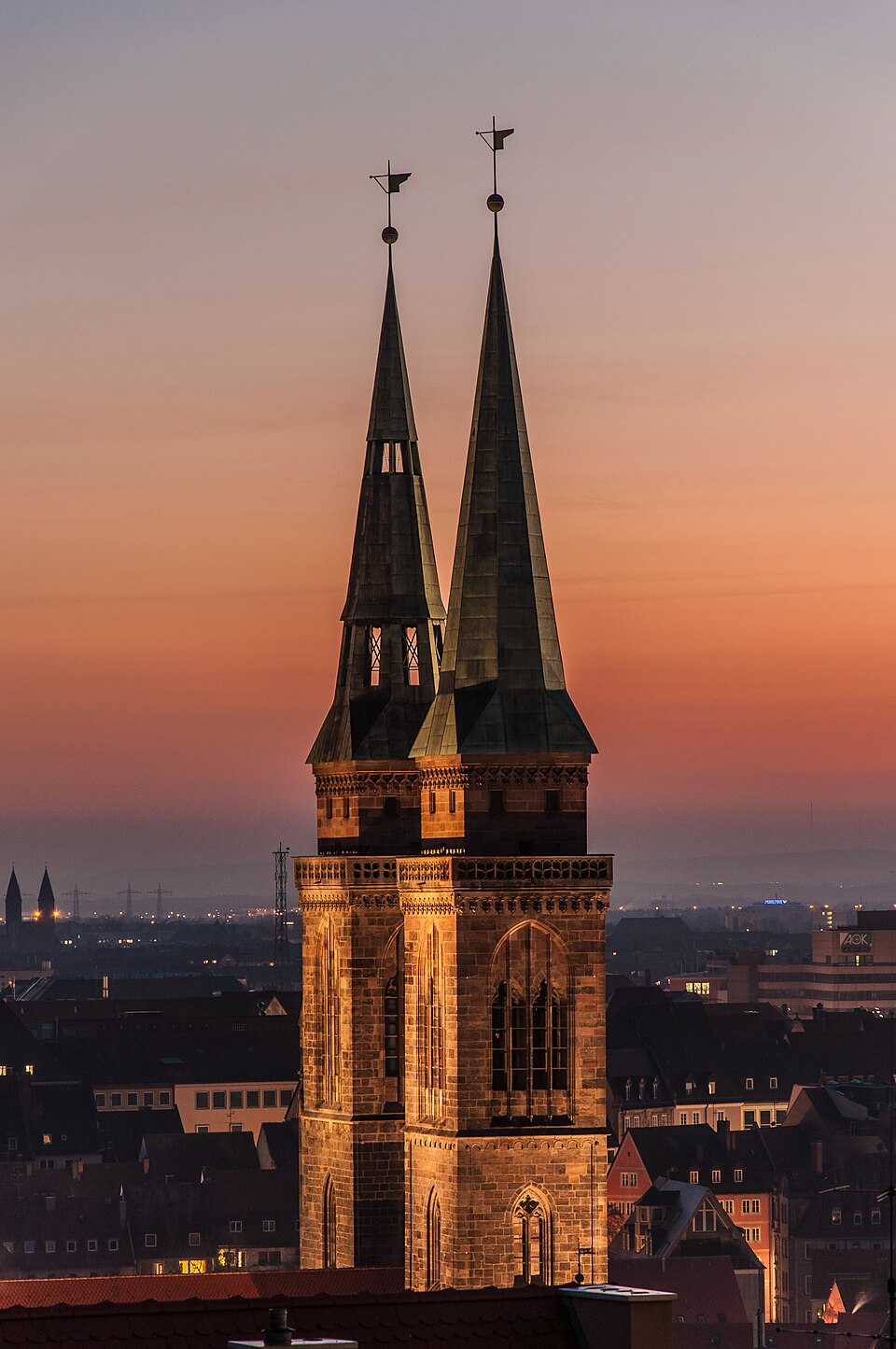
In 1695 Pachelbel returned to his birthplace as organist of the Sebalduskirche, the medieval cathedral-church of Nuremberg’s old town, and held the post until his death before 9 March 1706. He was fifty-two. He left a manuscript catalogue of works that has confused musicologists ever since — most of his organ music was preserved in scattered hands, with the result that the modern thematic catalogue runs to about P. 500 with substantial uncertainty about ordering and authenticity at the edges. Roughly thirty Magnificat fugues are still unedited.
The strangest coda to his story took place across the Atlantic. His son Carl Theodorus Pachelbel (born 1690, age fifteen at his father’s death) emigrated first to Boston, then in 1736 to Charleston, South Carolina, where he was appointed the first organist of St. Philip’s Church — making him the first professionally trained European organist to hold a salaried church post in the British colonies. Carl Theodorus died in Charleston in 1750. The Pachelbel organ tradition, by way of a Lutheran Nuremberger and a colonial Carolinian, ran continuously from Vienna to the New World.
Listening past the canon
The canon will not go away, and there is no reason it should. But the organist whose life work was nine hundred liturgical pieces deserves to be heard on his own ground. The Chaconne in F minor, P. 43 is twenty-two variations on a descending four-bar bass that twists between major and minor; the Toccatas of the Erfurt years are the model from which Bach’s own Weimar toccatas would later derive their three-part rhetorical shape; the Magnificat fugues, played as a complete set through the eight tones in a single recital, give the most complete surviving picture of how a German Lutheran organist actually approached the congregation Sunday by Sunday.
The Canon is the doorway. What lies behind it is a full house.