A guide to
Johann Ludwig Krebs
Buttelstedt 1713 — Altenburg 1780
Johann Sebastian Bach — by all the credible reports we have, a difficult man to please and a sparing flatterer of his own students — is recorded to have made a single joke in his entire teaching career, and the joke was about Johann Ludwig Krebs. The pun depends on the Old High German word krebs, meaning crab: the surname is identical with the animal. Bach of course means brook. The line, as preserved in Forkel’s biography of 1802, reads:
Er sei der einzige Krebs in seinem Bache. He is the only crab in my brook.
— J. S. Bach, on his pupil J. L. Krebs, as recorded by Johann Nikolaus Forkel, Über Johann Sebastian Bachs Leben, 1802
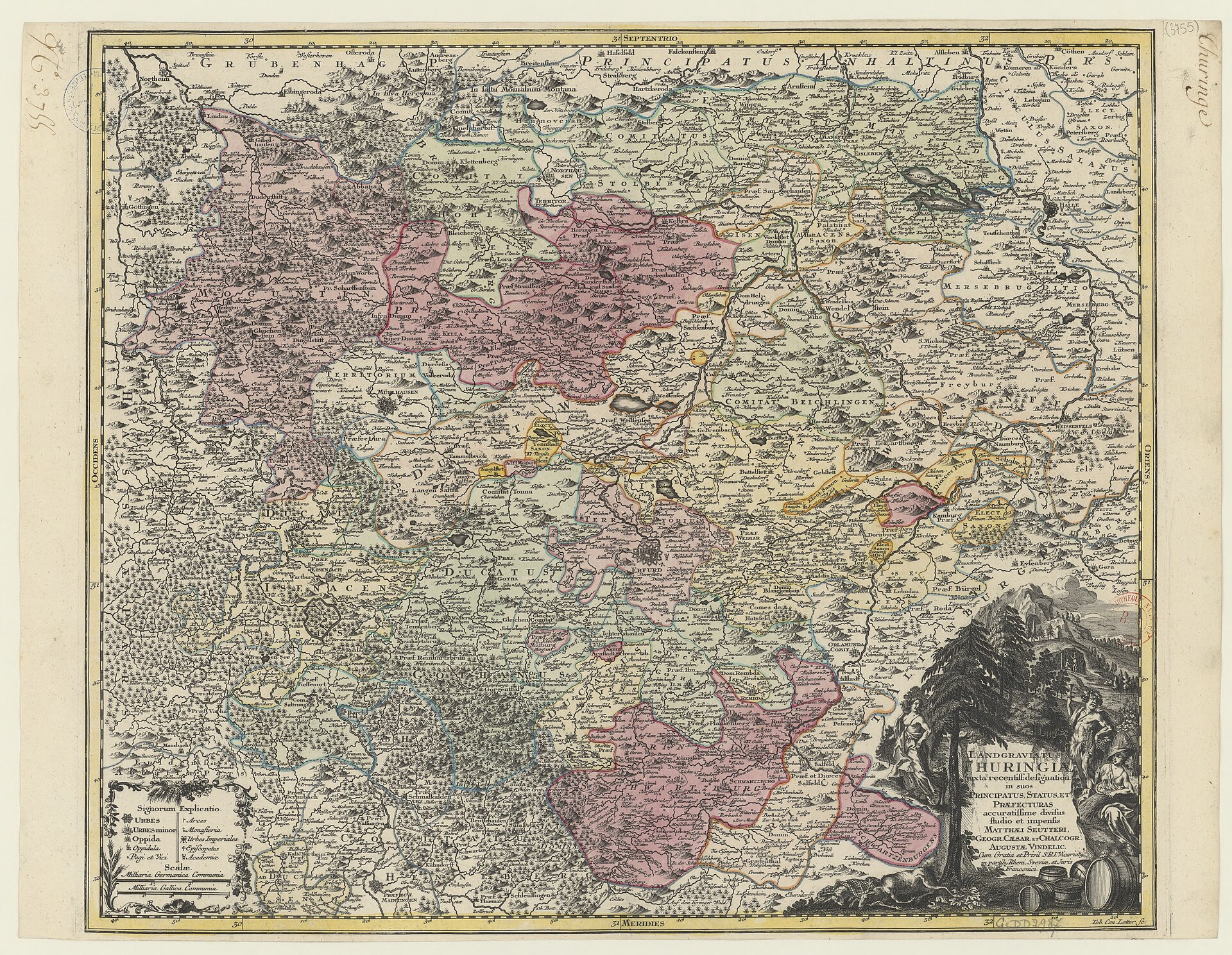
The pun is genuinely affectionate. Krebs — born 10 October 1713 in the small Thuringian village of Buttelstedt — became, over nine years at the Thomasschule from 1726 to 1735, the longest-serving and arguably most musically faithful of all Bach’s pupils. He is the only one of them whose surviving works could plausibly, on a blind hearing, be misattributed to his teacher.
A Bach family in everything but name
There were three generations of Krebs organists, and Bach taught two of them.
Johann Tobias Krebs (1690–1762), the father, was a Bach pupil during the Weimar years (1708–17). He studied alongside Walther at the next-door court chapel and absorbed Bach’s organ idiom from the inside; on his return to Buttelstedt as the village organist, he raised his son Johann Ludwig on a strict diet of his old teacher’s chorale preludes and fugues. When the boy was twelve in 1726, the father took him to Leipzig to enrol him at the Thomasschule under Bach’s direct tuition. He stayed nine years.
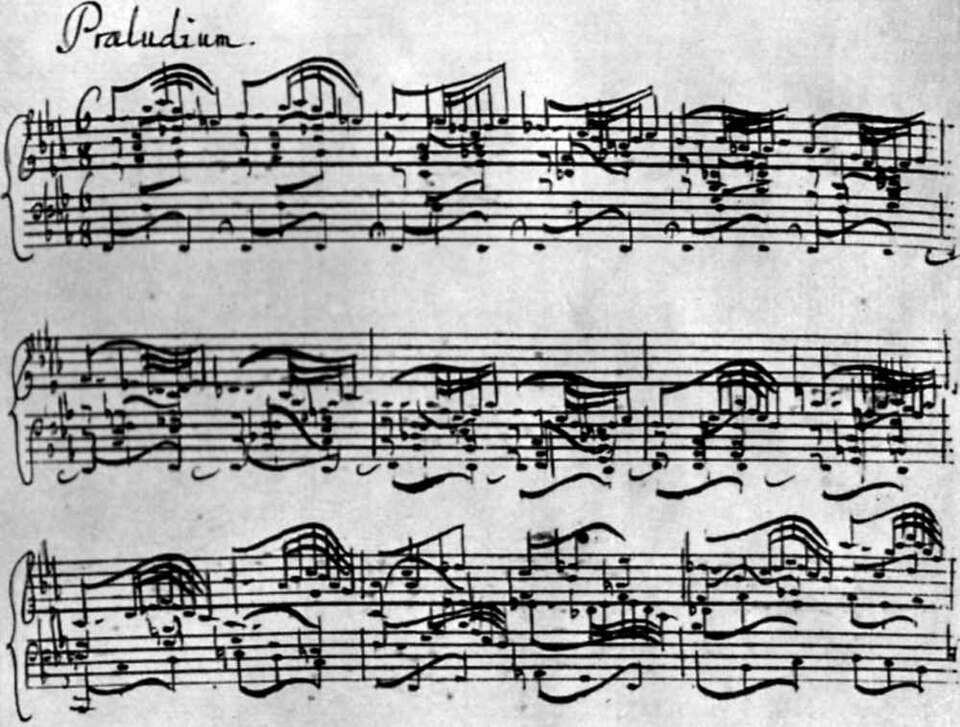
The young Krebs’s role at Leipzig was unusually intimate. He sang in the Thomanerchor — the choir Bach directed — and lived in the Thomasschule dormitory; he received private keyboard lessons; and from about 1729 he began copying out his teacher’s autographs in fair copy, sometimes for performance, sometimes simply because Bach had asked. A substantial portion of what survives of Bach’s organ music — including a large chunk of the Clavier-Übung III — exists in Krebs’s hand as the most reliable secondary source. He was Bach’s most trusted scribe.
If you are looking for an authoritative copy of any Bach piece for which the autograph is lost, the first place to search is the surviving Krebs manuscripts in Berlin and Brussels.
— Christoph Wolff, Johann Sebastian Bach: The Learned Musician, 2000
Zwickau, Zeitz, Altenburg

Krebs left Leipzig in 1735 and spent the next two years in his teacher’s house as a kind of senior assistant, before being appointed organist at the Marienkirche, Zwickau in 1737. He stayed seven years, then moved to the smaller but better-paid post at the Schlosskirche, Zeitz, in 1744. Finally, in 1756, he was offered the position that would crown his career: court organist at the Schlosskirche, Altenburg, home of the Heinrich Gottfried Trost organ.
The Trost organ at Altenburg is the most important instrument in Krebs’s life and, for organists today, the most important instrument associated with him. Built between 1735 and 1739, it was examined and approved by J. S. Bach in person on 7 August 1739 — the examination is documented in the Altenburg chapter records, with Bach giving his unreserved endorsement. The instrument survived the Napoleonic Wars, the Second World War, and the East German period virtually intact. The pipework Krebs played on, the wind system, and the original wooden trackers are still in service today; the visitor walking up to the organ loft at Altenburg is hearing the same instrument Krebs heard.
It was for the Trost organ that Krebs wrote his most ambitious organ works — the six trios, the Klavierübung in four parts (modelled on Bach’s Clavier-Übung), the great Fantasia and Fugue in F major (KrebsWV 420), and the chorale setting Es ist gewisslich an der Zeit (KrebsWV 700).
The end of the Bach line
Krebs outlived his teacher by thirty years. By the time he died on 1 January 1780, the keyboard world had moved on so completely that he and his style were already historical curiosities. Carl Philipp Emanuel Bach — his old fellow student at Leipzig — was now the great galant figure of the German keyboard, and the Mozart of the new generation was twenty-four and about to settle in Vienna. The chorale fugue had given way to the empfindsamer Stil; the rhetorical praeludium had given way to the sonata; the organ had given way to the fortepiano.
Krebs kept writing in Bach’s idiom anyway. His four-part Klavierübung of 1743–53 and his late chorale settings deliberately preserve the contrapuntal density and structural rigour his teacher had taught him. He knew the style was passing; he kept it alive because he believed in it. The Bach revival of the nineteenth century — when Mendelssohn began re-mounting forgotten Bach works in the 1830s — found in Krebs a parallel, lesser, but recognisably Bachian repertory that fit naturally onto the same programs.
The Altenburg court let his son Johann Gottfried Krebs (1741–1814) succeed him at the Schlosskirche organ. He held the post until his own death thirty-four years later. Three generations of Krebs organists, two of them Bach pupils, served the small courts of Saxony and Thuringia for almost exactly one hundred years. Bach’s brook outlasted Bach by a long way.