A guide to
François Couperin
Paris 1668 — Paris 1733
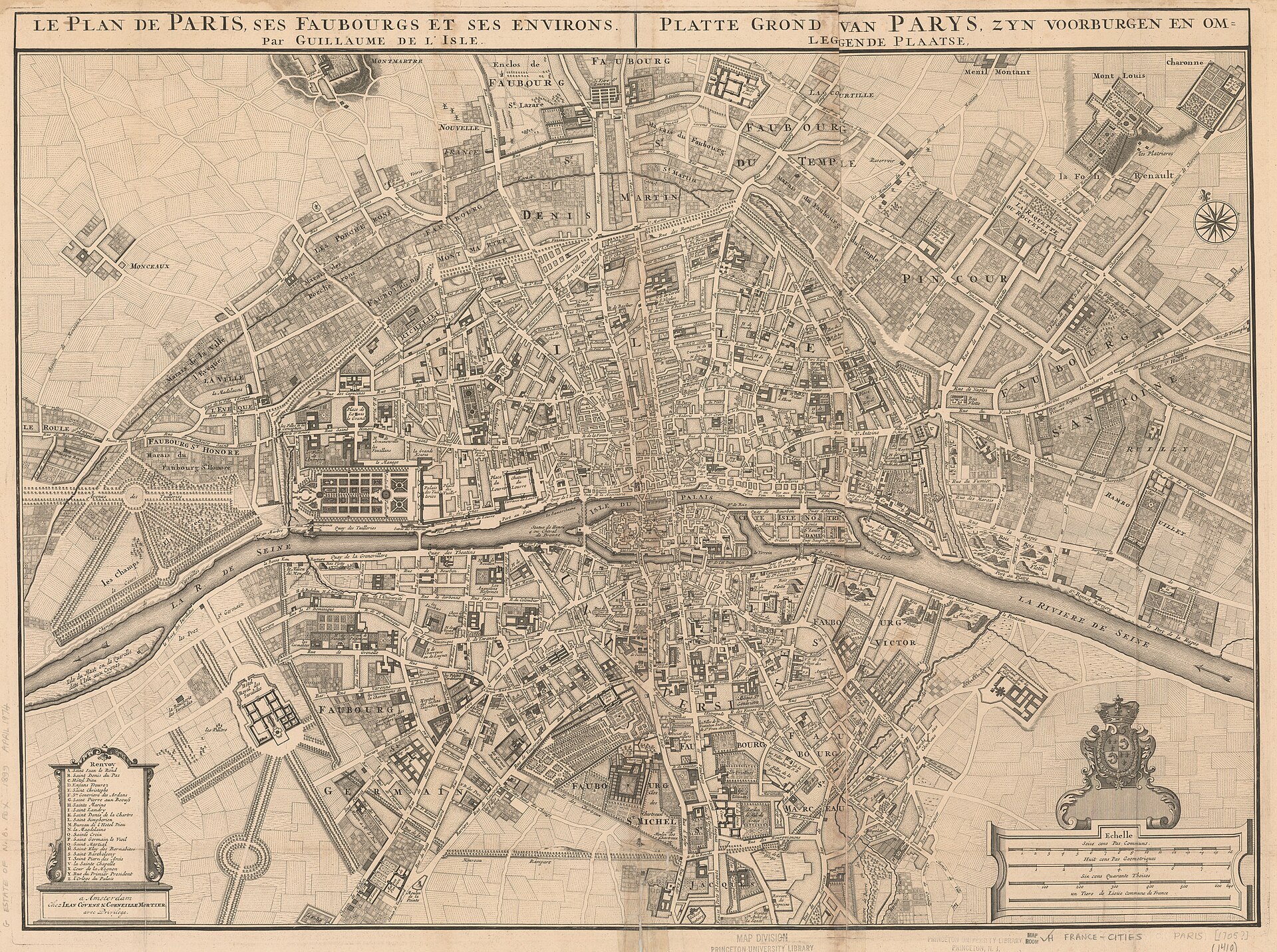
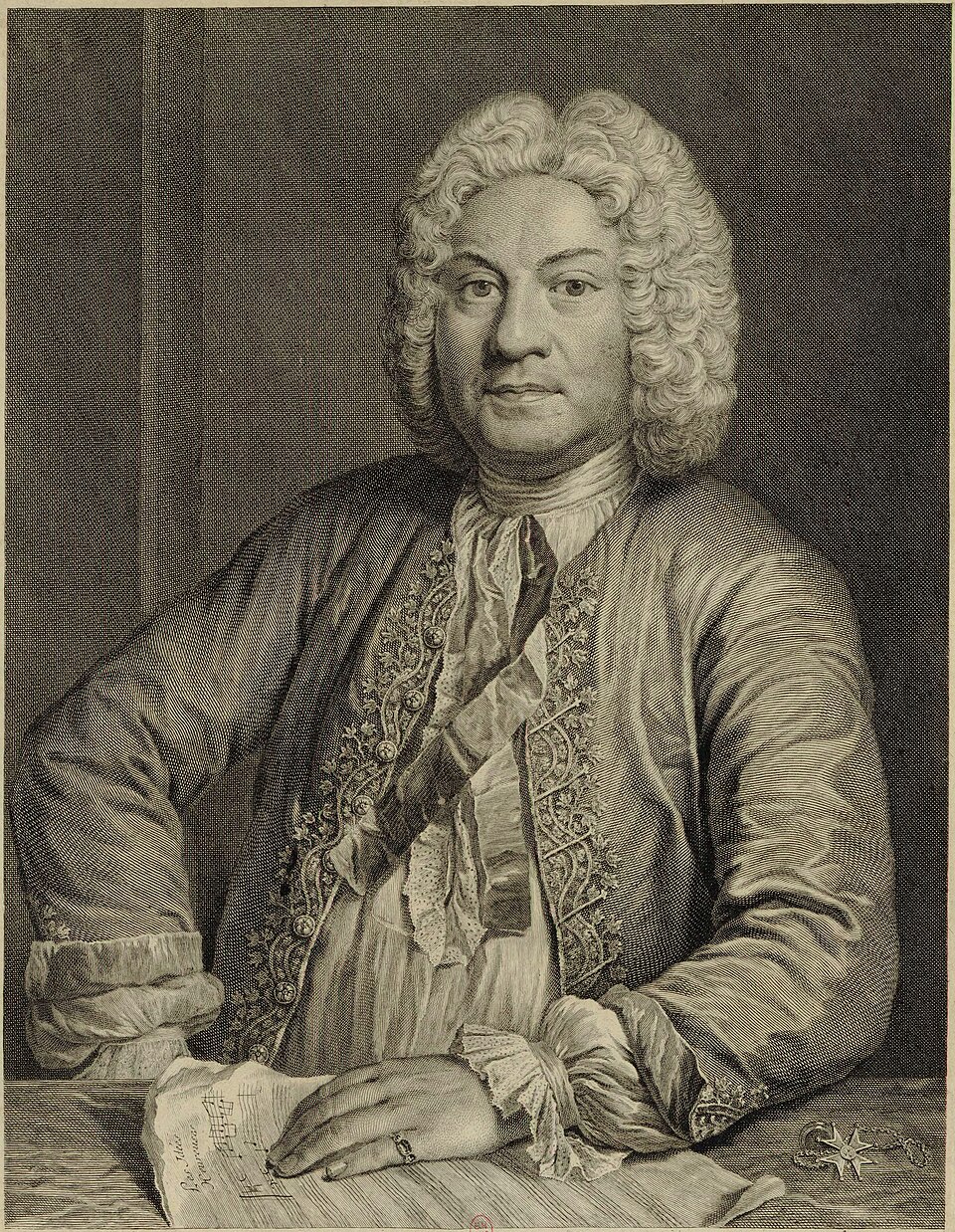
François Couperin, called le Grand to distinguish him from at least six other working musicians of the same surname active in his lifetime, was born into the most extraordinary musical dynasty France ever produced. His uncle Louis Couperin (c.1626–1661) was the most original keyboard composer of the early seventeenth century, an artist Bach knew from copying his unmeasured preludes. His father Charles had been organist of Saint-Gervais, a great late-Gothic church near the Hôtel de Ville in Paris’s Marais quarter. When Charles died in 1679, leaving François orphaned at eleven, the church wardens of Saint-Gervais took an extraordinary administrative decision: they appointed an interim organist with the explicit understanding that the boy François was to receive the post the moment he was old enough to play it. Six years later, in 1685, the seventeen-year-old François took the bench.
He did not give it up. The Saint-Gervais post had been held by his uncle Louis from 1653 to 1661, by his father Charles from 1661 to 1679, by interim hands from 1679 to 1685, and from 1685 by François until effectively 1723. After his death his cousin Nicolas Couperin held it until 1748. After that, Armand-Louis Couperin until 1789. After that, Pierre-Louis Couperin until 1858 — four generations and 173 years, the longest continuous tenure of a single family at any organ post in the history of European music.
Versailles, Louis XIV, and the Concerts royaux

In 1693 the king’s organist died, and at twenty-four Couperin became one of the four royal organists at the Chapelle Royale at Versailles — each organist serving one quarter of the year by rotation. In 1696 Louis XIV ennobled him under the title Sieur de Crouilly and granted him the right of arms. From the late 1690s he was also responsible, with Lully’s son-in-law Jean-Baptiste Lully fils and others, for the king’s chamber music — the famous Concerts royaux, weekly Sunday-afternoon performances in the king’s apartments, mostly of his own composing.
His relationship with Louis XIV was unusually warm for a musician at the court. When the king, in his final illness in 1715, asked to hear small chamber music in his bedchamber, Couperin and three others played the Concerts royaux in the king’s actual presence — Louis dying twelve weeks later. The Concerts royaux were published in 1722 and dedicated to the king’s memory.
He taught the royal children — the Duchesse de Berry, the Princesse de Conti, and most importantly the future Louis XV himself. The boy-king’s keyboard tutor for several years was François Couperin.
The Pièces de clavecin and the riddle of the barricades
Across his life Couperin published four books of Pièces de clavecin (1713, 1717, 1722, 1730) — over two hundred and thirty individual pieces, grouped into twenty-seven ordres rather than the more usual French suites. Each ordre is a loose chain of character pieces, almost every one bearing a quirky descriptive title: La Garnier (named for the harpsichord maker), La Couperinette (named for his daughter Marguerite-Antoinette), Les Bergeries, Les Folies françaises ou les Dominos, La Voluptueuse, Le Carillon de Cythère, Le Petit-rien, Le Tic-toc-choc, ou les Maillotins.
The most famous of all, Les Barricades Mystérieuses, sits as the fifth piece in the Sixième Ordre (Book 2, 1717), and three centuries of musicologists, performers, and amateurs have argued about what the title means. Hypotheses include: the suspended dissonances of the style brisé (the “broken style” the piece embodies); a private joke about the silken curtains around fashionable beds; a coded reference to women’s coiffures; the fontanges (high lace hair-ornaments) blocking the gentleman’s view at the opera; Couperin’s wife’s barricades against an importunate husband. The piece itself is two minutes of slow B-flat-major harmonies in suspended style brisé, and is one of the unmistakable single pages in the keyboard repertory.
The character pieces are also one of the founding documents of musical portraiture. La Visionnaire portrays a particular Parisian seer; La Mystérieuse might be Couperin’s wife; L’Atalante is the gossip-columnist of a particular salon. Sometimes the identifications are known. Sometimes the people lived only long enough to be portrayed and then vanished.
L’Art de toucher le clavecin (1716)
His pedagogical magnum opus, L’Art de toucher le clavecin (“The Art of Playing the Harpsichord,” 1716), is the most important keyboard treatise of the early eighteenth century — fifty-eight pages on fingering, ornamentation, articulation, and posture, with eight specimen préludes in his own hand to demonstrate. He insists that the harpsichordist must never move the body (“such grimaces are unbecoming and inappropriate”), that fingerings should be planned in advance, not improvised, that the fourth and fifth fingers should be used as freely as the others (he was among the first French composers to insist on the modern five-finger system). Bach owned a copy and used it; Daniel Gottlob Türk and C. P. E. Bach both built their later treatises on its foundations.
First: I am surprised that, after the pains people have taken to give rules to the keyboard, they have until now forgotten the most natural and the easiest to follow, which is, in playing, to imitate as closely as one can a beautiful song.
— François Couperin, L’Art de toucher le clavecin, Paris 1716
That single sentence — imiter le chant — is the foundation of French eighteenth-century keyboard aesthetics, and would echo through Rameau, Daquin, Royer, and across the Rhine into the galant style.
Les Goûts-Réunis and the reconciliation of styles
Couperin’s other great pedagogical project was the integration of the French and Italian styles. His 1724 chamber work Les Goûts-Réunis (“The Reunited Tastes”) is exactly what the title says: a set of trio sonatas in which French dance suites alternate with Italian sonata movements, both written by the same hand, in deliberate dialogue. The same year he published the trio sonata Le Parnasse, ou l’Apothéose de Corelli — “The Apotheosis of Corelli” — a programme work in which the Italian master is welcomed at the gates of Mount Parnassus by the Muses. A few years later he wrote a companion: L’Apothéose de Lully, in which Lully is welcomed in turn, and the two are at last reconciled.
In a France divided between Lullistes and Coreliistes — a partisan split that genuinely produced street arguments — Couperin’s position was that both were right. “The Italian and the French styles,” he wrote in the preface to Les Goûts-Réunis, “have for too long shared the favour of the public; it seems to me at last to be time, putting aside national prejudice, to attempt the reconciliation.”
This was a politically delicate position. Louis XIV had endorsed Lully as the only legitimate national style. By proposing that Corelli too belonged in the canon, Couperin was, quietly, taking sides — and outliving the controversy.
The last years and Marguerite-Antoinette
In 1722 Couperin’s daughter Marguerite-Antoinette Couperin was appointed royal court harpsichordist — succeeding her father at the keyboard. She was twenty-two, the first woman to hold the post, and would keep it until her own retirement in 1741. Her brother Nicolas-Louis had died young; she was the last of François’s children to carry the family musical line. (She herself never married and had no children. The line of Couperin le Grand ends with Marguerite-Antoinette.)
François died in his Paris house on the rue du Pont-aux-Choux on 11 September 1733, aged sixty-four. The fourth and final book of Pièces de clavecin had appeared three years before, and the title page carried the gentle admission that the music “may strike some as foreign to the style brisé” — by which he meant: he was writing more contrapuntally now, in his own old age, as the world turned toward the galant.
His grave at Saint-Joseph in the rue Montmartre was destroyed during the Revolution. His harpsichord, his manuscripts, and his copy of the Apothéose de Lully survive in the Bibliothèque nationale, the Pieces de clavecin in roughly two dozen modern editions, the Concerts royaux as a recital staple, and the four-generation occupation of the Saint-Gervais bench as a quiet record nobody is likely to beat.